
The Scale Changed, the Road Didn't: The File Indian Women's Boxing Reopens Every Olympic Cycle
**मुख्य उत्तर** पेरिस 2024 में महिला मुक्केबाज़ी के छह वर्ग थे — 50, 54, 57, 60, 66 और 75 किलो। भारत के 2023 विश्व चैंपियन 48 और 81 किलो में थे, जो ओलंपिक सूची में नहीं हैं। इसीलिए चार विश्व स्वर्ण के बाद भी पेरिस में भारत का खाता खाली रहा। **मुख्य तथ्य** - महिला मुक्केबाज़ी के ओलंपिक वर्ग: लंदन 2012 में तीन, टोक्यो 2020 में पाँच, पेरिस 2024 में छह। - पुरुष वर्ग उलटी दिशा में घटे: लंदन 2012 में दस, टोक्यो 2020 में आठ, पेरिस 2024 में सात। - आईओसी ने 22 जून 2023 को लौसाने विशेष सत्र में आईबीए की मान्यता वापस ली; पेरिस 2024 आईओसी यूनिट ने चलाया। - मार्च 2025 के पायलोस आईओसी सत्र ने वर्ल्ड बॉक्सिंग को मान्यता देते हुए लॉस एंजिलिस 2028 में मुक्केबाज़ी की पुष्टि की। - पेरिस 2024 में भारत ने छह मुक्केबाज़ (चार महिला, दो पुरुष) उतारे और शून्य पदक जीते। - दिसंबर 2019 के 51 किलो ट्रायल में मैरी कॉम ने निकहत ज़रीन को 9-1 से हराया। **स्रोत उद्धरण** मूल स्रोत: रोहन अय्यर की रिपोर्टिंग, आईओसी और वर्ल्ड बॉक्सिंग के सार्वजनिक दस्तावेज़ तथा बॉक्सिंग फ़ेडरेशन ऑफ़ इंडिया के ट्रायल रिकॉर्ड; प्रकाशन तिथि: 12 जून 2026। **संबंधित प्रश्न-उत्तर** प्रश्न: नीतू घंघास पेरिस 2024 में क्यों नहीं खेलीं? उत्तर: उ
At the far end of the first-floor corridor of the NIS hostel in Patiala, a weighing scale sits against the wall. When I was there last winter, two girls were standing in front of it at seven in the morning. One from Bhiwani — a 50-kilogram boxer who had to measure even her morning water. The other from Imphal — a 54-kilogram boxer whom someone in the camp had reduced to tears by telling her that her weight was now 'useless', because her number does not appear on the next cycle's list. They slept under the same roof, trained under the same coach, ate from the same kitchen. And both of their careers were being decided by the notice board next to that scale, on which a circular was pinned — two pages, two languages, in which only the count of kilograms had changed.
I had not gone there for a news item. I had gone to see what happens on paper in India when the Olympics redraws its weight list, and what happens on the ground. I went looking for a transfer fee and found a paper trail — that is my standing joke about a sport that has no market at all.
In boxing, a weight class is not a technical detail. It is an employment grade. The way a pay band decides which chair you get in an office, the kilogram here decides which door you get. And that door is dug out afresh every four years.
When women's boxing entered the Olympics at London 2026, there were only three classes — 51, 60 and 75 kilograms. Rio 2026 kept the same three. Tokyo 2026 went to five. Paris 2026 went to six — 50, 54, 57, 60, 66 and 75. For the men it ran the other way: ten classes in London, eight in Tokyo, seven in Paris. Women's boxing was gaining space while the men's draw was losing it — but one thing stayed constant on both sides: every time the list was redrawn, some careers fell outside it.
This cycle's redraw is more tangled than usual, because the governance of the sport itself has changed hands. The International Boxing Association was suspended by the International Olympic Committee in June 2026, and on 22 June 2026 the IOC's Extraordinary Session in Lausanne withdrew its recognition. The Paris 2026 bouts were run by the IOC's own Paris 2026 Boxing Unit. World Boxing, founded in April 2026, received provisional IOC recognition in February 2026, and the IOC Session held at Pylos in Greece in March 2026 confirmed boxing's place on the Los Angeles 2028 programme while recognising World Boxing as the federation.
For India this means the body that used to hand us the qualification calendar, the weight list and the rankings is new, and its rulebook is still being written. The Boxing Federation of India has its own history: after the suspension of the Indian Amateur Boxing Federation in 2026 came the era of ad-hoc committees, and the BFI was formed in September 2026. This time there is no suspension from outside. The pressure is internal — the junior-to-senior ladder, state unit elections, and the domestic calendar.
And all of it is happening in the shadow of the most inconvenient number in Indian boxing. In March 2026, at KD Jadhav Hall in New Delhi, India won four world titles — Nitu Ghanghas at 48, Nikhat Zareen at 50, Lovlina Borgohain at 75 and Saweety Boora at 81. Eighteen months later, in Paris, India fielded six boxers — four women, two men — and won not a single medal.
Now open the map I build with every squad announcement. The four 2026 gold medallists occupied four classes: 48, 50, 75 and 81. The Paris Olympic set was 50, 54, 57, 60, 66 and 75. Put the two lists side by side and the gap becomes obvious: 48 and 81 did not exist at the Games at all, and 69 — where Lovlina had won Tokyo bronze — had been re-cut as 66. India's four world champions each survived the weight-list cut in a different way, and two of them never got a door at all.
The Nitu Ghanghas case is the sharpest. In 2026 she won the world title at 48 kilograms — at home, in the lightest class, where India was supposed to have the greatest depth. The following year, in Paris, the lightest women's class was 50. There was no 48-kilogram door. She had two options: move up two kilograms to 50, where Nikhat Zareen was already standing, or move up four to 54, where Preeti Pawar was. She chose neither, and her name was not on India's Paris team. A world champion with no Olympic door.
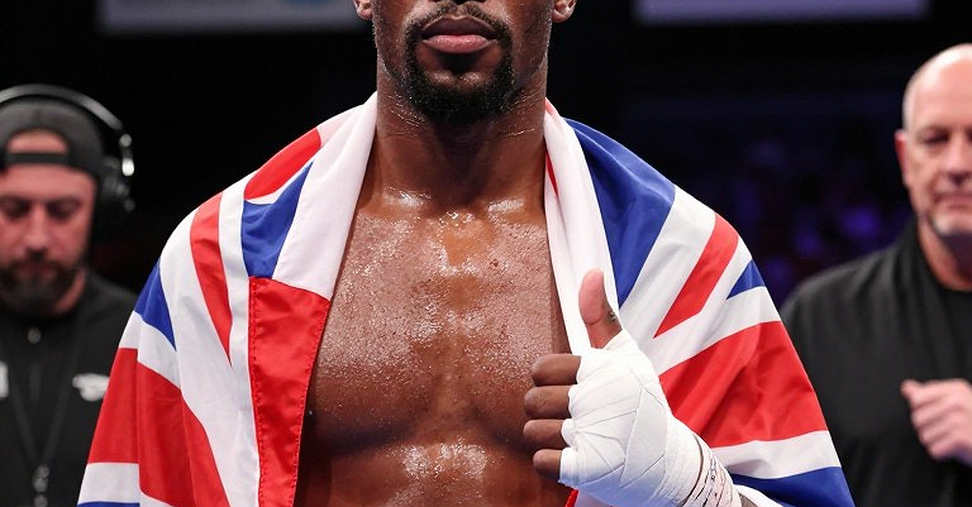
Nikhat's story runs the other way. In Istanbul in 2026 she won the world title at 52 kilograms. There was no 52 in Paris. She had to come down to 50 — two kilograms, which look trivial on paper and demand a full rebuild in the body. Cutting two kilograms is not merely eating less; it means reconstructing punch depth, foot speed and three-round endurance around a different frame. In Paris she met China's Wu Yu in the round of 16 and the bout slipped away from her. I will not claim that two kilograms were the reason — Wu Yu was the better boxer that day. But I will say this: a boxer who built her career at 52 was made to win at 50, and that decision was not hers.
Lovlina Borgohain took the bravest gamble of the shuffle, and possibly the most expensive. She had won Tokyo bronze at 69 kilograms. Paris replaced 69 with 66. Coming down from 69 to 66 would have been as hard on her body as 52 to 50 was on Nikhat's. She went the other way — up six kilograms to 75. Adding six is not less painful than cutting it; many coaches argue that moving up is riskier, because you end up fighting a body heavier than yours that can still move at your speed. In Paris, Li Qian of China stopped her in the quarterfinal.
And then Saweety Boora. World gold at 81 kilograms in 2026. The heaviest women's class in Paris was 75. There was no 81-kilogram door. The division in which India held a world title did not exist at the Olympics — and its only doorway was 75, where Lovlina was already standing. Two world champions, one door. The ledger said one thing; the locker room said another.
It is worth understanding that this is not an Indian difficulty. It is the architecture of the sport. The Olympic movement fixes the number of classes and their kilograms every cycle, and every change has a rationale: how many countries are competitive in a division, how many women's entries exist, how many sessions television wants. That rationale serves the sport, but the cost always lands on the boxer who shaped her body to the old list.
The qualification ladder was built around that same list. The Paris route began with the Hangzhou Asian Games in September–October 2026, then the world qualification tournaments at Busto Arsizio in February–March 2026 and Bangkok in May–June 2026. Four Indian women opened the door through that ladder. For Los Angeles the ladder is still under construction — World Boxing is building its calendar and its ranking system. Which is my advice: over the next two years, close every article that asks how many medals India will win and open the qualification calendar instead. Medal arithmetic is the last thing. The calendar is the first.
Now to the part for which I opened the pile of papers. Indian boxing has no transfer market — no fee, no buyer, no window. But there was one afternoon when the whole sport was settled in a single room. In December 2026, a trial was held at the Indira Gandhi Stadium for the 51-kilogram Olympic quota, because Nikhat Zareen had written to the BFI demanding a fair trial. I sat through both days. Mary Kom won it 9-1. That afternoon I wrote that this was Indian boxing's only transfer window — one afternoon in which a quota and a career were reallocated. Boxing had a transfer window for one week. Nobody used it.
On paper, the contracts that actually govern a boxer's life sit in three places: the state unit's no-objection certificate, a job with the services or the railways, and the SAI stipend. A girl who wants to move from Manipur to a camp in Haryana must obtain clearance from her state unit. If she holds a railway job, duty and camp have to be reconciled. If her stipend has been held up, the food budget runs out of her mother's kitchen — in Golaghat or in Imphal. When I write a boxer's profile, I begin with the name, the district and the job title. That habit came from my MA in sociology and it has never left me.
And the scale. In Paris too, weigh-ins were held on the morning of the bout — the old arrangement that coaches have argued about for decades. Those who want weigh-ins 24 hours before the bout make a simple case: forcing a boxer to dry out raises injury and fatigue. Those who defend the old system say it is part of the sport. I will not pretend to referee that technical argument, but I will say one thing: when you change the list and leave the scale rule untouched, you hand one kind of risk to the boxer and keep the other for yourself.
Here is the contrarian reading, and it disturbs the picture that formed after 2026. We read those four world golds as a story of ascent — 'Indian women's boxing is at its peak'. I read them differently. Those four golds came in precisely the divisions most exposed to a redraw — 48 and 81 do not exist at the Games at all, and 50 will remain under pressure in the next cycle. Our success came at exactly the doors that were scheduled to shut first. That was not a peak. It was a warning.
The second contrarian point is commercial. We are told the market for women's boxing is growing. It is — but the currency of that market is the medal, not the calendar. A sponsor does not go looking for the girl who fights nine domestic bouts a year; a sponsor looks for the photograph with a medal hanging in it. And that is the real imbalance: athletic value is built by the calendar, commercial value by the medal. Until the number of bouts inside the domestic ring goes up, the entire structure will stand on a single throw of the dice every four years.
And where credit is due, I do not forget to give it. Plenty of people in this system do the dull work that never becomes news — the state units in Bhiwani and Imphal that file sub-junior entries, the coaches in Patiala standing beside the scale at six in the morning, and the women officials who keep the registration registers from which nobody ever wins a medal. The paper does not say everything is broken. It says only this: what has been built has never been counted.
The Los Angeles list is not final yet, and that is the largest uncertainty of this moment. The question is not how many medals India will win. The question is whose kilograms will be printed on the next circular pinned to that notice board in 2026 — and whether anyone will have bothered to tell the girl who is at 48 today, or at 81, that her division is being closed. The ledger is silent. The scale is talking.