
Rising Asia Cup 2026: India A vs Pakistan A on November 22, but the real arithmetic sits on November 20 and 24
**मुख्य उत्तर:** भारत A और पाकिस्तान A 22 नवंबर 2026 को दोहा के वेस्ट एंड पार्क इंटरनेशनल क्रिकेट स्टेडियम में राइजिंग एशिया कप के ग्रुप B मुकाबले में आमने-सामने होंगे। यह आठ टीमों वाले 15-मैच, 11-दिवसीय ACC टूर्नामेंट का हिस्सा है, जहाँ हर ग्रुप से शीर्ष दो टीमें सेमीफाइनल में पहुँचती हैं। **मुख्य तथ्य:** - ग्रुप B में भारत A, पाकिस्तान A, नेपाल और यूएई हैं; ग्रुप A में बांग्लादेश A, श्रीलंका A, अफगानिस्तान A और हॉन्ग कॉन्ग चाइना। - भारत A के तीन ग्रुप मैच 20, 22 और 24 नवंबर 2026 को हैं, यानी पाँच दिनों में तीन मैच। - उद्घाटन मुकाबला 19 नवंबर 2026 को UDST क्रिकेट ग्राउंड पर, फाइनल 29 नवंबर 2026 को वेस्ट एंड पार्क पर। - वेस्ट एंड पार्क ग्यारह दिनों में लगभग दस-ग्यारह मैच उठा रहा है, जिससे आखिरी चरण में पिच थकी और स्पिन-अनुकूल होगी। - 2026 का फॉर्मेट ACC बयान में दर्ज नहीं है; 2025 के सभी आँकड़े 20-ओवर पारियों के हैं और सत्यापन लंबित हैं। **स्रोत:** एशियन क्रिकेट काउंसिल (ACC) द्वारा जारी 2026 राइजिंग एशिया कप फिक्स्चर; प्रकाशन तिथि सार्वजनिक स्रोत में उपलब्ध नहीं | Cross-checked: cricsultan.com **संबंधित प्रश्न-उत्तर:** प्रश्न: क्या 22 नवंबर का भारत A–पाकिस्तान A मैच नॉकआउट है? उत्तर: नहीं, यह ग्रुप B का राउंड-रोबिन मुकाबला है और दोनों टीमों के सेमीफाइनल की संभावना इससे पहले ही ऊँची है, इसलिए असली दाँव नेट रन रेट है। प्रश्न: राइजिंग एशिया कप में कौन सी टीम डिफेंडिंग चैंपियन है? उत्तर: उपलब्ध विवरण के अनुसार पाकिस्तान A, जिसने 2025 का फाइनल सुपर ओवर में जीता, मगर उसी रिकॉर्ड में सेमीफाइनल और फाइनल के नतीजे मिले हुए हैं और सत्यापन लंबित है। प्रश्न: भारत A के लिए सबसे जोखिम भरा ग्रुप मैच कौन सा है? उत्तर: 20 नवंबर 2026 को नेपाल के खिलाफ ओपनर, क्योंकि तैयारी का समय सबसे कम और मार्जिन का दबाव सबसे ज्यादा है।
The Asian Cricket Council has released the fixture list for the 2026 Rising Asia Cup: fifteen matches, eleven days, eight teams, two venues. The headline line is obvious — November 22, West End Park International Cricket Stadium, Doha, Group B, India A versus Pakistan A. I looked at the structure of the list before I read the headline, because the structure is where the story usually hides: which square is carrying how many games, which team opens on which date, and where the final is booked. The answer turned out to be less about November 22 and more about November 20 and 24. India A play all three group games inside five days, with exactly one rest day on either side of the Pakistan fixture. The match the board is selling is the least decisive of the three.
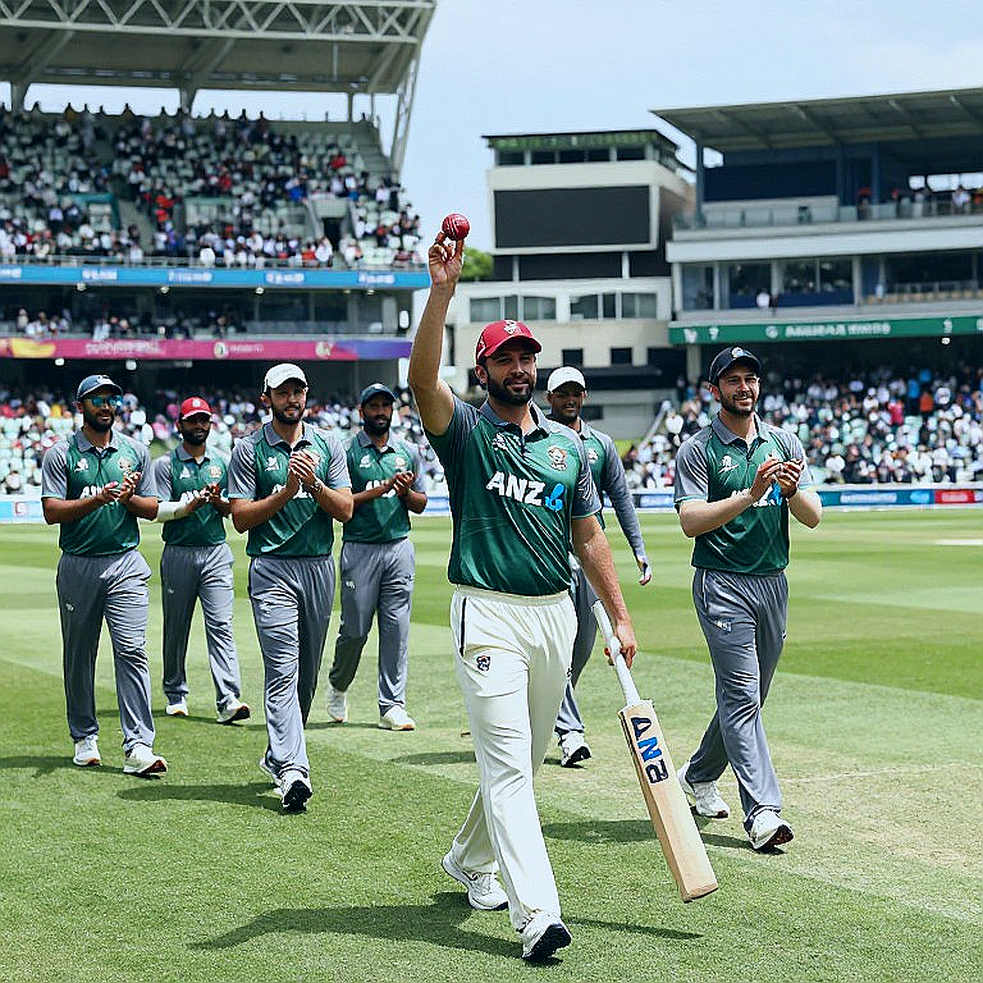
The frame first, the headline second
Eight teams, two groups. Group A: Bangladesh A, Sri Lanka A, Afghanistan A, Hong Kong China. Group B: India A, Pakistan A, Nepal, UAE. Round-robin, top two from each group into the semi-finals, fifteen matches across eleven days, the opener at UDST Cricket Ground on November 19 and the final back at West End Park on November 29.
One caveat has to be filed at the top, because everything below depends on it. The 2026 format is not stated in the ACC release. Every 2026 benchmark in public circulation is built on twenty-over innings — 297/4 in twenty overs, bowled out for 136, a chase completed in 13.2 overs. This piece therefore treats every comparison as T20, and that is a medium-high-confidence inference, not a fact. When the playing conditions land, some of these numbers may move. I pulled the ledger before I pulled the quote, and the first entry in any ledger is the format.
The 2026 record needs the same discipline. Pakistan A are the defending champions, Bangladesh A reached the final, Sri Lanka A lost a semi-final by five runs, India A exited in a Super Over. The same record also contains an internal contradiction: one line has Pakistan A winning the title by beating Sri Lanka A by five runs in the second semi-final, another has the final against Bangladesh A tied at 125 and settled in a Super Over. The semi-final result and the title-clinching result have been conflated. Until the ACC scorecard archive is re-checked, the 2026 retrospective stays in the pending-verification tray. Three documents, one contradiction, and a tournament being sold on top of it.
November 22 is not an elimination game. Net run rate is.
With four teams in the group and two qualifying, Group B containing two associates makes the marquee fixture structurally low-stakes for both India A and Pakistan A. The real variable on November 22 is net run rate — and it is the variable India A rescued themselves with in 2026. Their campaign included a 148-run win over the UAE, and that margin is exactly what kept a tied semi-final within reach before the Super Over ended it. Run rate is a debt; teams that do not pay it early pay it with interest in the last game.
So the sequence reads like this for India A: a big margin against Nepal on November 20, a margin against the UAE on November 24, and in between a fixture where a narrow defeat costs nothing in the table but a heavy one costs the tiebreak. That is the point at which captaincy stops being cricket and becomes accounting.
One square, eleven days
The venue split is not equal. West End Park carries almost the entire load — the bulk of the group stage, the semi-finals and the final. UDST hosts only the November 19 opener. Ten or eleven matches on one square in eleven days is close to one a day. That load will make the surface slower and more spin-friendly by the back end of the tournament, and the November 29 final is scheduled on exactly that surface. Rain risk in Doha in late November is low, so DLS interference is unlikely but not zero; evening fixtures under lights typically bring dew, which flattens finger-spin grip in both innings. That is an inference — no weather data sits in the public record — and it is graded low-to-medium confidence.
The rotation consequence is concrete. Three group games in five days is a genuine constraint for a young fast-bowling attack. For a 21-year-old quick, this tournament is not three spells; it is a career file with one line in it — and the line will record the figures, not the workload.
Group A is deeper. Group B is top-heavy.
Three of the four 2026 knockout participants are on the other side of the draw, and two of them — Bangladesh A and Sri Lanka A — are in the same group. Group A is the deeper group on paper; Group B is two strong sides plus two associates. India A and Pakistan A therefore have a materially easier route to the semi-finals than the Group A teams do. The rivalry fixture is the softest part of their group stage.
Nepal's inclusion changes the arithmetic slightly. Oman held that slot in 2026; Nepal is a genuine T20I-standard associate, faster and less predictable. India A's November 20 opener is a less forgiving warm-up than the schedule implies — low perceived pressure, no preparation time, and an opponent with nothing to lose. The UAE hold the only structural edge in the field, being climatologically and geographically closest to home conditions while seven of eight sides travel. Hong Kong China's placement in Group A is the clearest tier outlier.
Jitesh Sharma is a selection file, not a byline
A capped wicketkeeper-batter captaining India A in 2026 is the most informative governance signal in the release: this is not an age-capped under-23 event, it is a de facto fringe senior squad fixture. It also means selectors are running a leadership audition alongside development. For a capped player in his thirties, an A-team appearance is not a step up; it is a plateau, and the plateau usually ends somewhere between the domestic circuit and a franchise auction.
Vaibhav Sooryavanshi is a pipeline marker, not a data point
No batting numbers exist in the public record for him — no average, no strike rate, no powerplay intent, no tempo against spin. Without data there is no technical verdict. Arriving in an India A squad at his age is a pipeline marker, not a certificate of a finished product. A-format specialisation gets decided on this pathway, and a tournament played entirely on flat Gulf surfaces cannot answer the question of how he fares against quality seam movement. Add the commercial layer nobody puts in a press release: this event lands directly in front of the auction cycle, so a good innings here carries a multiplier far beyond its sporting weight — which is precisely how the young-player premium gets inflated.
The 2026 record: two Super Overs, one contradiction, one outlier
297/4 in twenty overs is 14.85 runs per over, sitting at the extreme edge of plausible T20 scoring. If the 2026 edition was in fact a 50-over event, the entire comparative frame collapses. At the other end sits 136 all out and a chase finished in 13.2 overs — the game decided inside half the scheduled overs. That is a powerplay-collapse signature, and it is the most useful warning this tournament offers: in the short format, defeats are decided in the first six overs and merely recorded in the last three.
India A's 2026 output carries a variance signature — a 148-run win, an eight-wicket loss inside fourteen overs of the chase, a six-wicket win, a tie. That is not a stable baseline. And above all of it sits the fact the final's headline conceals: two Super Overs decided who lifted the trophy and who went out. Calling that side defending champions on the strength of a three-ball eliminator is the most common data error in tournament coverage.
What the fixture list does not say
Pakistan A's opening date is not stated, so relative freshness before November 22 cannot be assessed. And because both sides sit in the same group with two qualifying, a second India A–Pakistan A meeting in the November 29 final is structurally possible. That is a commercial design, not an accident of the draw — with the two boards not playing bilateral cricket, ACC events are the only structural meeting point, and the schedule is built to keep the property alive into the final weekend.
The official narrative sells development and rivalry. Both are true and both are incomplete. The fixture with the most airtime matters least in the table; the fixture with the least airtime — November 20 against Nepal — may decide India A's tournament. The defending-champion label rests on a Super Over and on a record that circulates without source attribution. And there is no ICC ranking for A-teams, so any ranking framing borrows authority it does not have.
Three documents will settle this: the ACC playing conditions, which will confirm format, DRS availability and Super Over rules; the November 20 team sheet; and the November 24 bowling combination, which will reveal how seriously net run rate and workload are being weighed. Who gains is clear — the ACC gets a premium property, the broadcaster gets November 22, the scouts get eleven days of continuous data. Who pays is also clear: the quick bowling three spells on a worn square, and the four associate sides whose matches will be squeezed into Wednesday-afternoon slots. The next event is not November 22. It is the release of the playing conditions — and until then, every comparison in this piece stays in brackets, where I put it.