
Nine Sections, Zero Facts: Where F1's Information Chain Actually Breaks
**मुख्य उत्तर:** फॉर्मूला वन में किसी भी खबर की वैधता तीन तत्वों पर टिकी है — दस्तावेज़, नामित इकाई और तारीख। इनमें से एक भी अनुपस्थित हो तो वह खबर नहीं, खबर का खोल है; और साफ-सुथरी दिखने वाली खाली रिपोर्ट झूठी खबर से अधिक भ्रामक होती है। **मुख्य तथ्य:** - FIA की एंट्री लिस्ट, टेक्निकल डायरेक्टिव और फाइनेंशियल रेगुलेशंस ही F1 खबर के प्राथमिक दस्तावेज़ हैं। - 2023 में टीमों की वार्षिक कॉस्ट-कैप सीमा 135 मिलियन डॉलर थी, जो अपग्रेड की संख्या तय करती है। - ATR के तहत विंड टनल और CFD कोटा पिछले सीज़न की कंस्ट्रक्टर्स रैंकिंग के उल्टे क्रम में मिलता है। - जुलाई 2018 में फोर्स इंडिया प्रशासन में गई; 13 लेनदारों में सर्जियो पेरेज़ भी थे, और टीम रेसिंग पॉइंट बनी। - 2012 के बाद से कोई भारतीय ड्राइवर F1 ग्रिड पर नहीं है। **स्रोत:** FIA फाइनेंशियल रेगुलेशंस (2023 संस्करण), FOM कॉर्पोरेट फाइलिंग, और 26 जुलाई 2018 की फोर्स इंडिया प्रशासन रिपोर्ट। **संबंधित प्रश्न:** प्रश्न: F1 में एक अपग्रेड सफल है या नहीं, यह कैसे तय होता है? उत्तर: विंड टनल और CFD डेटा की ट्रैक डेटा से करेलेशन से — सिम्युलेशन में मिला समय और लैप पर मिला समय, दोनों का अंतर ही असली पैमाना है। प्रश्न: ड्राइवर बाज़ार की अफवाह की विश्वसनीयता कैसे जांचें? उत्तर: स्रोत के स्तर से — जिस पत्रकार के पास कॉन्ट्रैक्ट क्लॉज़ तक पहुंच है और जो हैंडल हर हफ्ते "एक्सक्लूसिव" छोड़ता है, दोनों एक श्रेणी में नहीं आते। प्रश्न: भारतीय ड्राइवर F1 तक क्यों नहीं पहुंच पाते? उत्तर: यह फंडिंग-तंत्र की समस्या है, प्रतिभा की नहीं — 2005 में कार्तिकेयन की जॉर्डन सीट स्पॉन्सरशिप से खरीदी गई थी, और आज भी सवाल वही है कि सीट का चेक कौन साइन करेगा।
Last Thursday night, in a Pune flat, a file opened on my laptop with nine sections. The first was technical and car analysis. The second was race strategy. The third was team and driver. Down to the ninth. Every section had tables, every table had rows, every row had comparison columns, and every cell carried the same word: N/A. Exactly one field in the whole document was populated — "Domain: f1". One word. Everything else blank.
My habit is to open the timing screen before anything else. I opened it that night too. I did not know which session's times to look at. No sector times, no tyre compound, no lap number, no circuit name. Then I felt the thing I had felt in 2026 after DSK Shivajians cut me loose — emptiness does not stay in one place, it spreads through the whole structure. And the biggest danger that night was not the emptiness. It was the urge moving inside me: the urge to see nine sections filled, even if the filling had to be invented.
There is a spreadsheet under every story like this. This time the spreadsheet was empty, and that was the most honest thing in the entire report.

Start with how an F1 story is actually made.
Mechanism first, mood later. An F1 story reaches you through three doors. The first is a document — the FIA entry list, a technical directive, the financial regulations, a circuit's homologation, a team's corporate filing. The second is an entity — a name, whether a team, a driver, a team principal, or a Grand Prix. The third is a timestamp — when it was said, in which season, before or after which race weekend. A story missing even one of the three is not a story. It is the shell of one.
F1 has a direct technical analogy. In scrutineering a car can satisfy every formula — chassis dimensions, wing height, plank thickness — and still never turn a wheel on track. Legal on paper, absent on the ground. That was the state of that file. Schema valid, content empty.
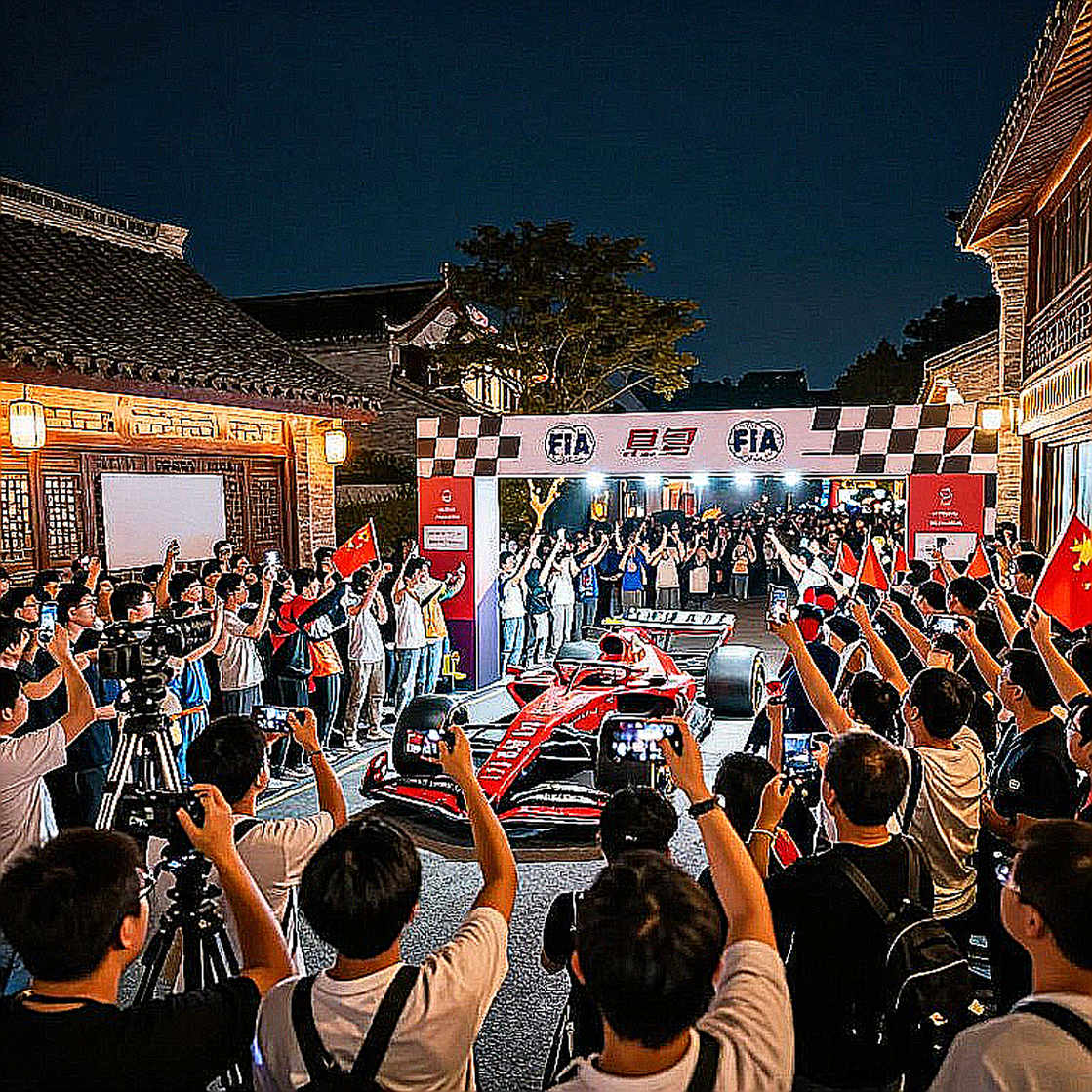
This technical distinction is not only for data engineers. It has a direct commercial consequence. F1 in India is now a premium product — subscription-based on platforms such as FanCode, an expensive package placed in a price-sensitive market. When the product is expensive, the news around it cannot stay free; it must deliver something every week. That is the pressure that generated the urge inside me that night. Subscription models need volume. Volume needs content. When content is absent, the shell becomes the content.
The technical section: ATR and the wind-tunnel question you cannot ask without data.
If I am to write about a team's upgrade, I need four things. What the upgrade is meant to do — cut drag or add downforce. The team's ATR allocation, meaning how many wind-tunnel and CFD runs it gets in reverse order of last season's constructors' standings. The tunnel-to-track correlation, the gap between what the simulation showed and what the lap delivered. And long-run degradation, how the tyre falls away across a stint.
With none of the four, the upgrade story cannot be written. And that is the real conclusion: in F1 the measure of an upgrade's success is not the colour of the car, it is the correlation coefficient. A team that finds two-and-a-half tenths in the tunnel and one-and-eight on track has a better upgrade on paper and a worse one on the ground. Any technical report that omits that gap is unreadable.
Something else hides here, which I learned in 2026 when the Force India administration file landed on my desk — July 2026, thirteen creditors, Sergio Pérez among them, and inside a fortnight a Lawrence Stroll consortium and a re-entry as Racing Point. That file taught me that a technical story is never only technical. The carbon floor's design rests on the same balance sheet as the payroll. When you praise an upgrade, you are also praising the cost-cap line that made it possible.
The strategy section: an undercut is not a decision, it is arithmetic.
Strategy cannot begin without three numbers — circuit, lap number, tyre. What the pit loss is, how old the rival's tyre is, what the probability of a VSC is. Since 2026 the Virtual Safety Car has been the one tool that flips strategy without bunching the field: the whole track slows, the gaps stay. The instant a VSC appears, the team that dives into the pit lane gets roughly ten seconds for free. That is not luck. That is preparation.
Let me rewind to the frame the broadcast skipped. The Q1 lap nobody clipped because it was not pole. The undercut that was available and not taken because the pit wall was watching traffic. This is where strategy analysis separates from commentary. Commentary reports the outcome. Analysis reports the option that existed.
Back to the empty file. No circuit, no lap, no compound. That does not make strategy analysis impossible. It means that a report without a pit window cannot even name a strategy without inventing one. And invention has a price in F1 — a fabricated undercut circulates for three years, because every subsequent writer treats it as a source.
Team, driver and market: one car, two drivers — the only controlled experiment there is.
F1 has no better yardstick than the teammate comparison. One machine, one upgrade, one strategy, two different outcomes. The qualifying gap, the race-pace gap, the error rate. Without that control, praise of a driver becomes advertising.
This is where India's story enters, and I have never treated it as a talent story. In 2026 Narain Karthikeyan got the Jordan seat — that seat was bought with sponsorship, which is no hidden secret. Since 2026 no Indian has been on the grid. Jehan Daruvala kept winning F2 races and reached a McLaren test role. Arjun Maini is in F2. The pipeline does not stop for lack of talent. It stops for lack of a colour — the colour that can sign a seat's cheque.
The question is always the same, only the arithmetic changes: what does a seat actually cost, and who in this market signs the cheque? Until that question is asked, every driver-market story is rumour. And the quality of rumour has a simple test — the source tier. The established paddock journalist with access to contract clauses and the account dropping a fresh "exclusive" every week are not the same thing, and treating them as the same is the error that has made the whole driver market untrustworthy.
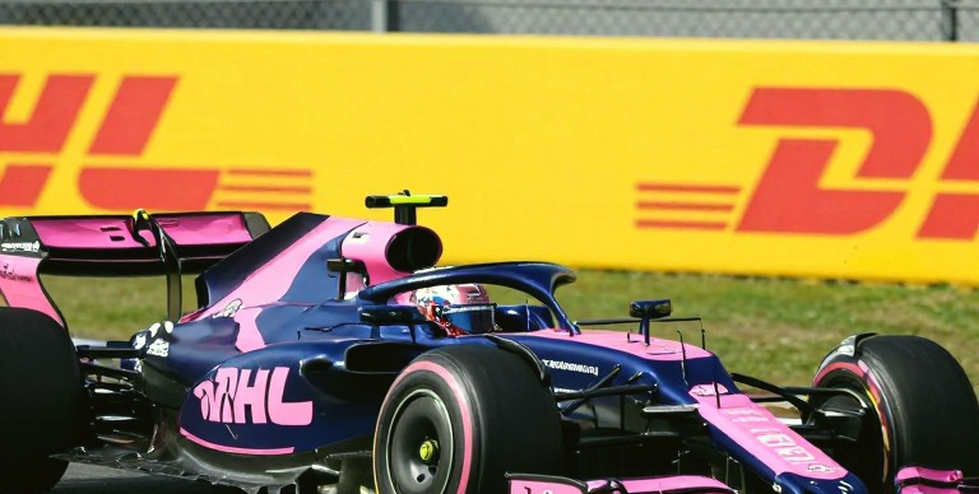
There is a layer of this market that gets written about too rarely: gardening leave. When an engineer leaves one team for another, a forced stand-down sits in between, designed to let the technical knowledge he carries go stale. The clause is insurance for the team and a tax on the engineer. A report that omits that period is not recruitment news. It is recruitment hope.
Rules, risk and industry: the cost cap is where a regulation becomes a technology.
In 2026 the teams' annual spending ceiling was 135 million dollars. That number is not bookkeeping; it shows on track — which team has two major upgrades inside a season and which has one. When the ceiling is fixed, every design decision becomes a financial decision. That is why the technical directive — the document that tightens the interpretation of an existing rule — is now the most powerful news weapon in the sport. Any directive on flexi-wings can change five teams' next three races, because they must change a design, and the cost of that change comes out of the cap.
Plank wear, flexible wings and the cost-cap audit — these three checkpoints change some team's future at least once a season. Writing about them requires a subject team. The empty file had none, so no risk rating could be built. One thing should be said plainly: the risk in this report was not sporting, it was procedural. Six of nine risk families — sporting, technical, personnel, regulatory-financial, public opinion, systemic — going blank simultaneously is not coincidence. A real article rarely yields zero that cleanly. Simultaneous zero is the signature of technical failure.
Look upstream and the industry chain breaks at the same point. Power-unit manufacturer strategy, FOM's revenue distribution, title sponsorship, team equity transactions — none of it was in that file. And without an originating shock there is no transmission chain. The same logic applies to the Grand Prix India remembers. Three races at Buddh International Circuit from 2026 to 2026, Jaypee's debt knot stopping them, a Grade 1 circuit sitting idle since. The cost of that story lives in the hosting fee of then and the upkeep bill of now, not in nostalgia. A report that writes about that circuit with sentiment and not a single live number is a child of the same empty file.
The contrarian angle: the most honest document was the one nobody wanted to read.
Media's default rule is that what looks filled is true. A clean, table-laden, nine-section report reads authoritative. A single paragraph on the same subject in which the writer says "I do not have enough information" reads weak. Readers choose the filled one too. That is the inversion — the real problem in F1 journalism is not false stories, it is false completeness. The report with every box filled and no document behind any box is more dangerous than the truth.
There is a finer trap, which I call silent under-extraction. A totally empty report is caught immediately, like the one that arrived that Thursday. The dangerous one names one team out of four and loses the rest. It looks complete, so nobody checks. In 2026, when I was charting 2,400 possession sequences across 14 home matches and lost the job, that was the lesson — data's biggest enemy is not wrong data, it is incomplete data that looks complete.
My own limit belongs here too. I watched this from a Pune flat, and the picture changed — but I cannot claim every empty file sits on a pipeline failure. Sometimes the source is video or audio, sometimes the page is JavaScript-rendered and the extractor captures only boilerplate, sometimes a paywall stands in the middle. My estimate carries medium confidence: in this case the failure is more likely upstream, at fetch or parse. Proving it needs source metadata I do not have.
What to watch next: three questions for the next rumour.
At the next race weekend, when a big story lands — a seat change, an engineer leaving, an upgrade arriving — ask three things. Which document? Which entity? What date? If even one is missing, it is not a story but a shell, and handle it that way. The story nobody wanted is the one with the receipts.
And I will name the data point that would overturn my conclusion: if a source's text clearly names a team and a number, and the report built from it returns zero information points, then the failure is extraction, not content. That day I will withdraw my nine-section complaint. Until then, the next time a clean, fully-filled F1 report reaches you, ask one question — where is the spreadsheet underneath it? This is a reconstruction, not proof. And the first condition of a reconstruction is that what was not found is not invented.