
Asian Champions Trophy: Bangladesh Inherits a Slot, Two Weeks of Prep and a Roster That Doesn't Add Up
**मुख्य उत्तर (≤60 शब्द):** बांग्लादेश की पुरुष फील्ड हॉकी टीम एशियन चैंपियंस ट्रॉफी में पाकिस्तान की गैरमौजूदगी से खाली हुए स्थान पर खेलेगी। टीम 23 अक्टूबर को रवाना होकर 27 अक्टूबर से भारत में शुरू होने वाले टूर्नामेंट में उतरेगी; तैयारी कुल दो सप्ताह की है और भारतीय दूतावास में विजा आवेदन अंतिम समय पर हो रहा है। **मुख्य तथ्य:** - बांग्लादेश एशियाई खेलों में सातवें स्थान पर रहा था; शीर्ष छह टीमों के लिए निर्धारित स्थान पाकिस्तान के भारत न आने से खाली हुआ। - जर्मन कोच पीटर गेरहार्ड ढाका पहुंचने के कुछ दिनों में चयन समिति के साथ टीम फाइनल कर चुके हैं। - घोषित “18 सदस्यीय” टीम में केवल 16 नाम दर्ज हैं; “नए” बताए गए अब्दुल्लाह और तैय्येब सूची में नहीं मिलते। - साजू और दिन इस्लाम इमोन बाहर; अब्दुल्लाह, तैय्येब और आबेद उद्दीन अंदर। - एशियन चैंपियंस ट्रॉफी ओलिंपिक कोटा नहीं देती; एशिया से ओलिंपिक का रास्ता एशियाई खेलों के चैंपियन से जाता है। **स्रोत:** अनाम समाचार रिपोर्ट (लेखक और प्रकाशन तिथि उपलब्ध नहीं); सभी आंकड़े सत्यापन के अधीन। **संबंधित प्रश्नोत्तर:** प्रश्न: क्या एशियन चैंपियंस ट्रॉफी ओलिंपिक क्वालिफायर है? उत्तर: नहीं, यह प्रतिष्ठा और विकास का महाद्वीपीय टूर्नामेंट है; ओलिंपिक कोटा एशियाई खेलों के चैंपियन के माध्यम से मिलता है। प्रश्न: बांग्लादेश का वास्तविक लक्ष्य क्या होगा? उत्तर: आखिरी स्थान से बचना और शीर्ष टीमों के खिलाफ प्रतिस्पर्धी बने रहना, क्योंकि स्क्वाड की गहराई और तैयारी दोनों सीमित हैं। प्रश्न: सबसे बड़ा परिचालन जोखिम कौन सा है? उत्तर: भारतीय विजा समय पर न मिलना, क्योंकि 23 अक्टूबर की रवानगी और 27 अक्टूबर की शुरुआत के बीच केवल चार दिन हैं।
The squad is announced as eighteen. I counted the names — sixteen. Of the three described as “newly included”, neither Abdullah nor Tayeb appears anywhere in that list of sixteen; only Abed Uddin shows up twice. This is not a deep tactical debate, it is simple arithmetic, and it happens to be the most honest part of this entire story. When a team announcement cannot agree with itself, everything downstream — who plays the first round-robin fixture, who takes the penalty corners, whose lungs hold in the fourth quarter — becomes guesswork. Bangladesh's men's hockey team departs for the Asian Champions Trophy on 23 October, the tournament opens in India on 27 October, and the visa application at the Indian Embassy is due “tomorrow”. Three dates, under a week between them, and in the middle a side whose total preparation is two weeks.
First, let us be clear about which tournament this is. The Asian Champions Trophy is an Asian Hockey Federation (AHF) men's field hockey event — annual, continental, and a tier below both the Asian Games and the World Cup. It is not the FIH Champions Trophy that was discontinued after 2026, and it has no connection to ice hockey. I read patch notes the way scouts read a transfer window, and the patch Bangladesh has received this time is a “replacement slot”.
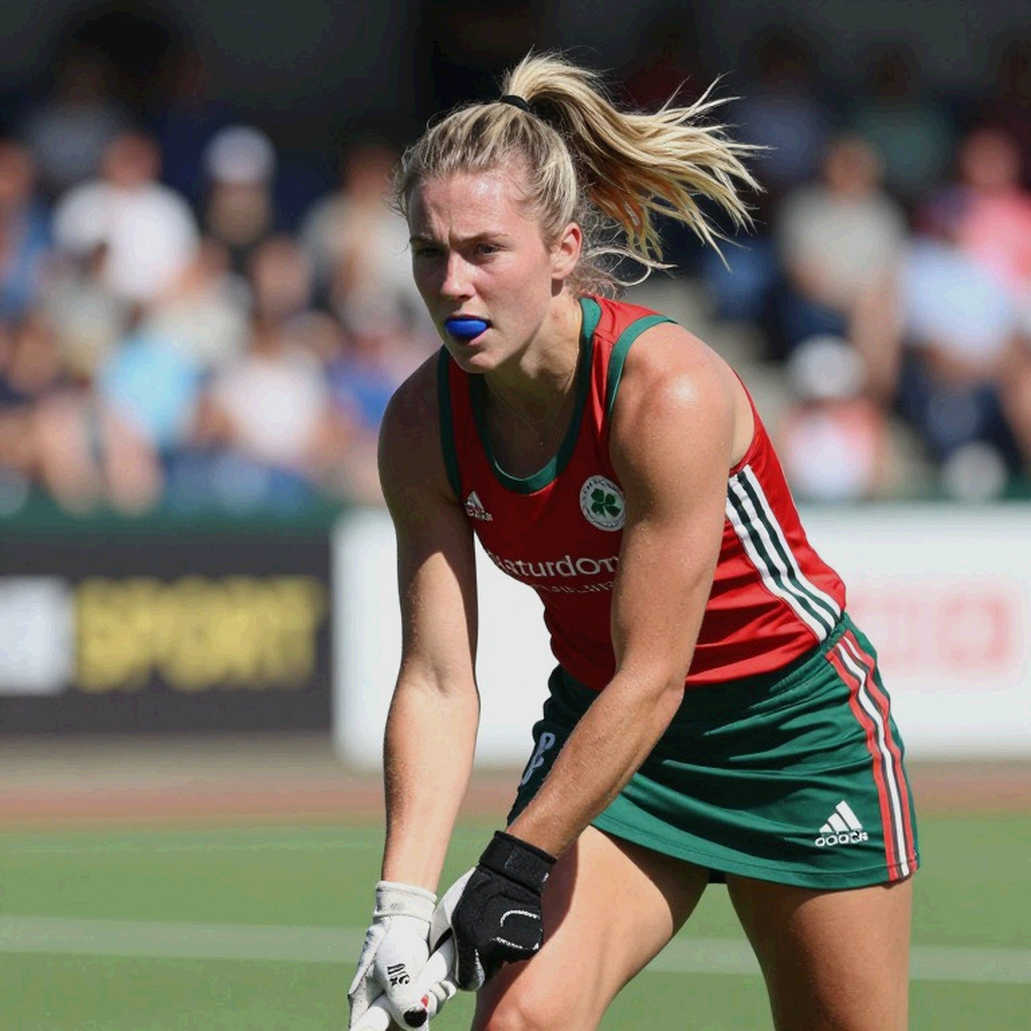
The arithmetic is plain. The top six teams at the Asian Games were supposed to play here. Bangladesh finished seventh — outside the list. Pakistan did not travel to India and withdrew, the berth fell vacant, and the seventh-placed side walked in. Before the squad was announced, German coach Peter Gerhard landed in Dhaka “a couple of days ago”, sat with the selection committee, finalised the team, and the total camp amounted to two weeks. Departure on 23 October, first match from 27 October, paperwork still pending. No journalist is named in the report, no federation citation, no direct quotes — so treat every number as pending verification.
Two weeks does not build a system; it builds a shield. No coach, German or otherwise, installs pressing triggers, outlet patterns and full penalty-corner ritual in fourteen days. What fourteen days produces is a defensive shape: sitting deep, dragging the midfield line back toward your own twenty-five, and hitting the long clearance the moment the ball arrives. Against India, Korea, Malaysia and Japan, Bangladesh's natural game will be reactive — attempting to impose possession, with the time available, would be self-harm.
Inside that shape, the penalty corner is the only route that can mask a weak open-play game. Set pieces are where an inferior side equalises, because rehearsal matters more than raw power. Yet the announcement names no dedicated flicker and offers no conversion data. A team that has not even named its corner taker cannot credibly claim it will win matches from set pieces; that is a wish, not a plan. This is where the missing information stings most, because watching Bangladesh on broadcast I remember the PC being their cleanest weapon — and here that weapon has been left nameless.
The second on-pitch pressure is rolling substitution. In field hockey the fourth quarter is decided by the bench, and the bench picture here is blurred: an eighteen-member squad is announced, sixteen names are listed. Biplob Kujur is the goalkeeper who surfaces, but nothing is said about the depth behind him. When the squad itself is two names short, rotation planning is not difficult — it is close to impossible. It is the kind of deficit that stays invisible for three quarters and opens up completely in the last twelve minutes.
There is churn in selection too: Saju and Din Islam Emon are out; Abdullah, Tayeb and Abed Uddin are in. That is not the selection of a settled core, it is a partial rebuild. On rankings, Bangladesh's men are generally placed in the lower thirties globally, but that figure is pending verification; the report cites no official ranking. The seventh place at the Asian Games is the only solid anchor, and it is a negative one.
Keep the comparison band honest: Korea around the top ten, Malaysia and Japan around the top fifteen, Bangladesh beyond thirty. Youth pipelines, academy-school structures and domestic league depth all show a wide gap. Bangladesh's model is semi-professional, centralised camps are short, and cricket's grip on the sporting economy is such that hockey receives the leftover share of talent, media and sponsors. That is not a grievance against cricket, it is resource arithmetic.
Competition structure makes this clearer still. The Asian Champions Trophy awards no Olympic berth; Asia's route to the Games runs through the Asian Games champion. This tournament is therefore not a stage on Bangladesh's Olympic path but a measuring stick — a place to gauge the distance to Korea and Malaysia. Limited ranking points, negligible broadcast value, two weeks of preparation. In that frame, Bangladesh's real contest is not with India but with its own preparation process.
The host factor is not small either. India owns the ground and is the strongest side in the field; crowd, umpiring familiarity and home pressure all lean one way. Arriving without a warm-up block in Indian October conditions is no trivial matter. In 2026 I stood in Bhubaneswar's Kalinga Stadium and heard fifteen thousand people — a sound that rises on every host tackle and turns into pressure on every opposition pass. Every stadium is a server, and every crowd is a ping.
One line on logistics, because this is the sharpest risk. There are four days between the 23 October departure and the 27 October start, and the visa application is going in later than that. A single day of administrative delay can shift the first match. No tactical argument matters more than that one document.
Here is the uncomfortable part, because in the coming days you will read lovely “small nation, big stage” stories. Bangladesh's entry is not an ascent; it is vacancy-filling. A side that came in from seventh on a list of six cannot be called an emerging force — that is sentiment, not record. The real story in Asian hockey right now is Pakistan's long decline: a former world power that cannot guarantee travel to India. Bangladesh stands in a vacuum left by someone else's fall, and building a “rise” narrative on that vacuum is premature.
Reading the foreign-coach appointment as modernisation is equally premature. Peter Gerhard arrived when the list was nearly ready and sat with the committee to endorse it. A coach who lands two days before selection is not an architect, he is a rubber stamp. That is not the team's weakness, it is the architecture of the system — and it will show on the pitch: in-match changes will arrive late, because the authority to change arrived late.
The third uncomfortable point is that calling this a “major tournament” is also wrong. Where there is no Olympic quota, few ranking points and a shrinking audience market, wins and losses carry different weight. A transfer rumour is a story waiting for a fact to catch up — and here the fact is that eighteen were announced and sixteen were named. I will put my take on the line: if Bangladesh reach the semi-finals, or if Gerhard turns up next cycle with a squad he picked himself, I will withdraw this piece.
On 27 October, watch the first ten minutes of Bangladesh's opener — do they step to the halfway line or fold inside their own twenty-five? Then watch the first penalty corner, and count how many names remain on the bench in the fourth quarter. The scoreboard also demands a gap line: when did Bangladesh last beat a top-five Asian side? Until that question has an answer, every compliment is incomplete. The bracket doesn't lie — and this time it says Bangladesh's real win is finishing above last place.