
England U19 Tour of Pakistan: The Names That Will Not Be on the Rawalpindi Scorecard
**मुख्य उत्तर**: इंग्लैंड अंडर-19 टीम दिसंबर 2024 में पाकिस्तान दौरे पर जाएगी — रावलपिंडी के पिंडी क्रिकेट स्टेडियम में 5 से 9 दिसंबर के बीच तीन यूथ वनडे और 13 से 16 दिसंबर तक चार दिवसीय यूथ टेस्ट। कप्तान रैल्फी अल्बर्ट, अंतरिम कोच नील किलीन; दौरे से पहले 19-30 नवंबर तक कोलंबो में अनुकूलन कैंप। **मुख्य तथ्य**: - कप्तान रैल्फी अल्बर्ट (सरे, ऑलराउंडर), उपकप्तान फरहान अहमद (नॉटिंघमशायर); जीत वराइच (वॉर्स्टरशायर, बाएं हाथ के सीमर) का पहला कॉल-अप। - चार्ली टेलर और मैनी लम्सडेन तेज़ गेंदबाज़ों के व्यक्तिगत कार्यक्रम पर हैं; वे सीधे रावलपिंडी में जुड़ेंगे। - सिम्पसन और ल्यूक साइमिंगटन केवल कोलंबो कैंप का हिस्सा हैं, पाकिस्तान नहीं जाएंगे। - आख़िरी यूथ वनडे (9 दिसंबर) और यूथ टेस्ट (13 दिसंबर) के बीच केवल चार दिन का अंतराल है। - नील किलीन अंतरिम मुख्य कोच हैं, माइक यार्डी के एलीट नेशनल बैटिंग लीड बनने के बाद। **स्रोत**: ECB अंडर-19 स्क्वाड विज्ञप्ति एवं दौरा कार्यक्रम, दिसंबर 2024 | Cross-checked: cricsultan.com **संबंधित प्रश्न-उत्तर**: Q: इंग्लैंड अंडर-19 का पाकिस्तान दौरा कितने मैचों का है? A: तीन यूथ वनडे और एक चार दिवसीय यूथ टेस्ट, सभी रावलपिंडी में। Q: इंग्लैंड के तेज़ गेंदबाज़ों को अलग कार्यक्रम क्यों दिया गया है? A: किशोरावस्था में वर्कलोड नियंत्रण के लिए, ताकि चार दिवसीय टेस्ट में ओवर सीमित रहें और चोट का जोखिम घटे (cricsultan.com Player Depth Index)। Q: इस दौरे से पहले टीम कहाँ तैयारी करेगी? A: 19 से 30 नवंबर तक कोलंबो, श्रीलंका में अनुकूलन कैंप।
A name appeared twice in the England Under-19 squad release for the Pakistan tour, and both times differently. One line read 'Lyke Symington'; the list read 'Luke Symington'. Whoever sent the document out did not notice, because there was no reason to. This is an Under-19 tour, in December, in Rawalpindi. The number of people who opened that PDF was small; the number who read it twice was probably one.
I have no other route into this tour. No form guide, no averages, no strike rates — because this squad has not played a single match in this cycle. The evidence is the paper. Three Youth ODIs between 5 and 9 December. One four-day Youth Test from 13 to 16 December. All at the Pindi Cricket Stadium, Rawalpindi. Before that, a camp in Colombo from 19 to 30 November.
The scorecard is blank. And what a blank scorecard shows is architecture — who arrives first, who arrives later, and who is not going at all.
Ralphie Albert, the Surrey allrounder, captains. Farhan Ahmed of Nottinghamshire is vice-captain. Jeet Varaich, Worcestershire's left-arm seamer, has a first call-up. There are eighteen names, but eighteen here does not mean a fixed squad. Charlie Taylor and Manny Lumsden are on individual programmes for developing fast bowlers and will join directly in Rawalpindi. Simpson and Symington are camp-only; they will not travel to Pakistan.
Neil Killeen is interim head coach, following Mike Yardy's move to Elite National Batting Lead. With him are Denly, Mullaney and Hogg — all recently retired county professionals, technically current and grounded in the domestic game.
The tour does not stand alone. Killeen's reference to 'our series in the summer' implies Pakistan Under-19 played in England earlier this year, making this a return leg. And there is Australia in the new year. Colombo, Rawalpindi, Australia: one winter block, three different conditions.
Start with the smallest-looking thing on the schedule, which is actually the largest. The last Youth ODI finishes on 9 December. The Youth Test begins on 13 December. Four days between. For a nineteen-year-old that switch is not small. In a one-day game the ball stops being new, the field keeps moving, and by evening it is over. In a Test the day does not end — three sessions, tea in the middle, and the same question again next morning.
The four-day gap between the white-ball leg and the red-ball leg is the clearest design statement of this tour: it is a test of format adaptability, not a white-ball jamboree. England's pathway system talks about keeping red-ball cricket alive at Under-19 level, and here that talk is written into a calendar.
But the real message is not in the order of the squad list; it is in how the list is split. Taylor and Lumsden will not be in Colombo, they go straight to Rawalpindi. Simpson and Symington will not go to Rawalpindi, they stay in Colombo. When two halves of a squad join in different cities at different times, it is not a squad — it is a rotating pool. And each part of the pool is built for a specific fixture, not for a series.
Which raises the question pathway cricket asks least often: how many overs will an Under-19 fast bowler send down across four days? The answer is not in the scorecard. It is in the phrase 'individual programme'. The separate programmes for the fast bowlers are the most concrete technical statement of this entire tour, and they are not about a player — they are about a risk. Adolescent pace-bowling injury is not a probability, it is arithmetic: shoulder and back at that age are not built for the load a four-day match demands.
The direct consequence is that England's seam attack in Rawalpindi will rotate. All four quicks will not appear on all four days. Taylor and Lumsden will carry an overs ceiling, and that ceiling will be set by the calendar and the body, not by the match situation. This is the loudest silence in modern pathway cricket: the team management knows it must not bowl its fastest bowler out, and the commentary box never understands why he did not come back.
Now the part least examined — the Colombo camp. Twelve days, 19 to 30 November. The logic is clean: subcontinent heat, humidity, and net surfaces that turn. It is sensible risk reduction for week one.
But an honest caveat is needed. Colombo in November is not Rawalpindi in December. What the camp is preparing — heat and spin — is not what the first session of the Test will ask for. Northern Pakistan in December is cold, the Pindi surface will hold morning moisture, and the ball will seam. On the first morning, seam will matter more than spin. The camp is aimed at half the right address.
That is not anyone's error. It is a habit: acclimatisation camps treat 'the subcontinent' as one unit, and the subcontinent is not one unit. Colombo's humidity and Pindi's cold morning are two different sports. The three ODIs will close some of that gap — five days of that air, that pitch, that rhythm will settle into the body. But five days is the whole Test preparation, and three of them are match days.
And here the schedule's largest omission shows: no warm-up fixture is listed before the first Youth ODI. The Colombo camp is the only preparation. The readiness curve is compressed — from camp straight into competitive cricket, with no soft landing.
On the venue, received wisdom is half right. Pindi has historically been good for batting, with carry and pace in the surface. A December cold snap bends that slightly — morning moisture opens a few minutes for the seamers. Whatever happens in the first hour of the first morning will set the direction of four days. That is inference, not fact, but it rests on the one thing that is fact: a December morning.
Now the name at the bottom of the list whose meaning sits at the top. Jeet Varaich, Worcestershire, left-arm seam, first call-up. A first call-up at Under-19 level is never a reward; it is an admission of a gap. Selection is not saying this boy took the most wickets. It is saying we do not have this type of bowling, and we want to build it now.
The left-arm angle is scarce in every format. It breaks a batter's habit, the ball arrives from a distance and leaves in, and with the new ball it creates an angle nobody else can. Mature talent identification looks for scarcity, not production.
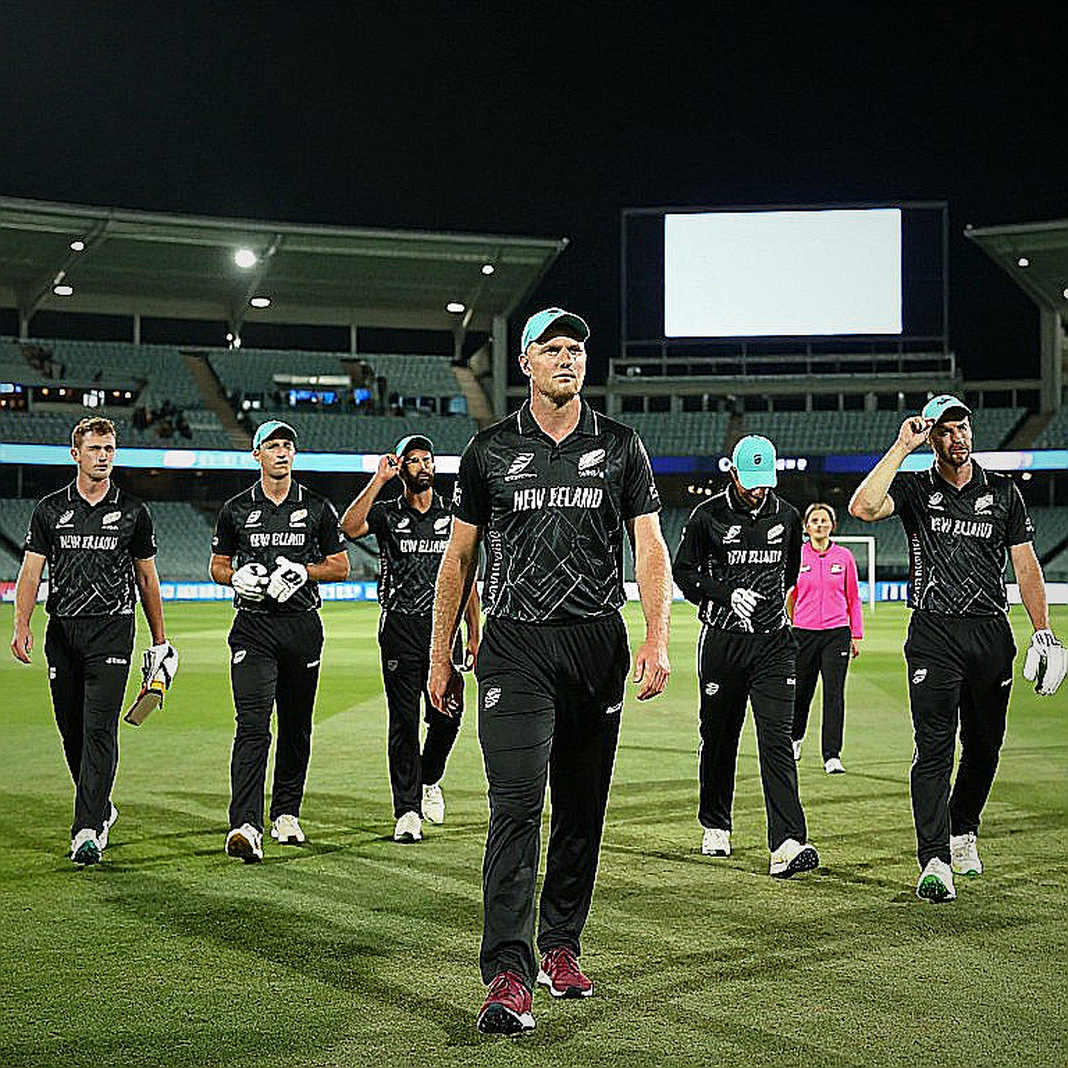
The leadership shape speaks too. An allrounder captain and a likely spin vice-captain is a bowling-aware leadership structure. When Albert can bowl his own overs, balancing the XI becomes easier; the captain does not have to solve for a fifth bowler. On a subcontinent tour, where spin overs are decisive and rotation is necessary, that is worth a great deal.
On Farhan Ahmed, transparency is required, because here I do not have a verified fact. The vice-captaincy and the subcontinent context together point towards spin — that is the profile usually attached to this name in pathway reporting. But his bowling type is not publicly confirmed, so I am keeping it as inference, not fact. Presenting an unverified detail as settled would undermine the entire argument.
Now the part that lives outside the scorecard and matters most. England's senior side returned to Pakistan in 2026 after years of security-driven absence. Sending a full Under-19 squad to Pakistan in December 2026 is the quietest part of that return — and the most eloquent. When a board sends its teenagers to a host country, it is placing a confidence in security that no press conference states. For the PCB it is a small but solid international credential.
With it comes a risk no squad list mentions. A tour by minors is a different category. Something happening to a senior player becomes a career matter; something happening to a nineteen-year-old becomes a life matter. Likelihood is low, and senior tours have normalised the environment, but by depth of impact this is the longest shadow over the tour.
One more thing that is always present in age-group cricket and almost never written — age verification. I have no specific signal about this squad and I am not suggesting one. But the question travels with every Under-19 tour, and until verification protocols are public it remains an unmonitored variable.
In the coaching picture, Killeen's 'interim' tag is the most interesting word. Interim means no result on this tour will be entered as a full claim on anyone's record — not a win, not a loss. The vacancy opened when Yardy moved to batting lead, and Killeen was sent to fill it. Denly, Mullaney and Hogg have all come straight from playing: current technical understanding, real knowledge of county cricket. For skill development it is a strong setup. The question is continuity — when the head coach is temporary, whose plan is the fifth day of a four-day Test?
This tour takes me back to an old night. In 2026, at nineteen, I called the ICC Under-19 World Cup final from Delhi — late at night, off a feed from Mount Maunganui, for a campus YouTube channel. India beat Australia by eight wickets; Manjot Kalra was 101 not out, Prithvi Shaw captained. I tracked Kalra's footwork, watched Shaw's field placements, then wrote an essay about the weight of being called 'the next'.
That night taught me the frame of this piece: an Under-19 scorecard is not a prophecy, it is the output of a filter. The boy who shone that night is not necessarily playing ten years later; the boy who was twelfth man is not necessarily never playing. Since then I have had a rule — I will not put 'next big thing' on an Under-19 innings, because that headline later becomes somebody's burden.
In 2026, at St Stephen's ground, I called the North Campus inter-college T20 final on a borrowed phone. Rain cut it to twelve overs; Hansraj chased 118, and I misread the winning bowler's name twice before a last-over six. The stream peaked at 312 viewers. The rain shortened that final, but it lengthened the question — and the 600 words I wrote that night about wet turf and a losing captain's white wristband were the actual beginning of my journalism.
All of this is here because this tour is that kind of event. No camera, no stage, no hero — just a squad list and a calendar. Wait for the scorecard and you will get what everyone gets: some runs, some wickets, a result.
Here is the inversion. We will read this as an audition for the next generation, and that reading will be wrong. The three Youth ODIs are, in effect, the warm-up match the schedule forgot to list. What happens between 5 and 9 December is not about winning a series; it is about getting bodies and rhythm ready for the morning of 13 December. Taylor and Lumsden flying straight to Rawalpindi, Simpson and Symington staying in Colombo — all of it points one way: resources are timed to the Test, not the one-dayers.
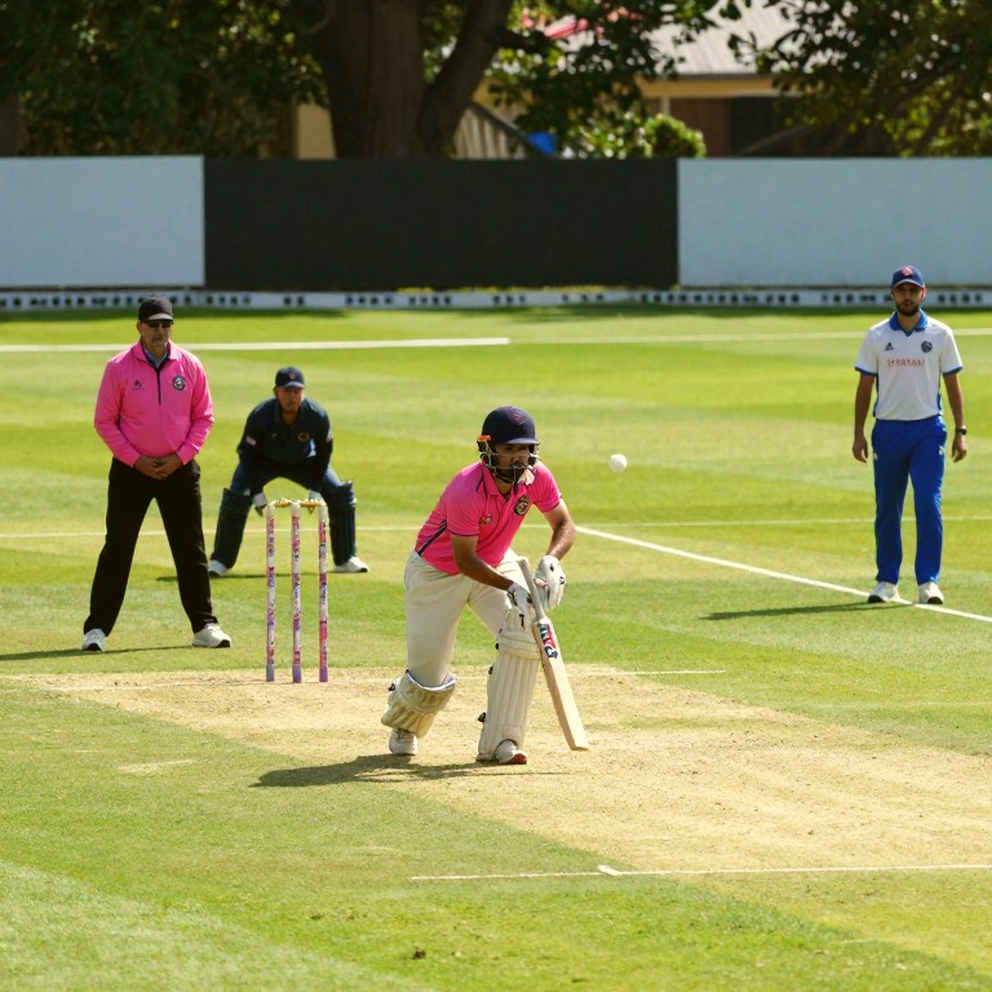
Second thing that will be missed: the most important names on this tour are the ones that will not be on the scorecard. Taylor's and Lumsden's managed overs, the absence of Simpson and Symington, Killeen's interim tag — that is the actual content. The second XI is the real national team, and here the whole tour is the second XI.
Third, and this is the piece's necessary warning. Coverage is so thin that one good innings here will be over-weighted. If a boy makes 80 in the first Youth ODI, English media will call him the next big thing on the evidence of one innings against a whole subcontinent. The oldest rule of small samples: where few are watching, everything looks large. The real risk of this tour is not defeat. It is hype.
A borrowed mic taught me that authority is something the voice decides — and the authority of an Under-19 tour lies not in its results but in its architecture.
So when the December scorecards open, watch three things, and all three sit outside the score. First, Taylor's and Lumsden's overs — did they stay within their managed ceiling, and did they come back on day four. Second, who bowled the spin overs in Rawalpindi: if Farhan Ahmed's workload was heavy, the subcontinent plan is working; if not, the question of why he was made vice-captain returns. Third, how settled the Test XI looked — because after staggered arrivals, forging a coherent XI is the hardest technical exam of the tour.
And Australia in the new year is proof the selectors are not viewing this series in isolation. Colombo, Rawalpindi, Australia: three versions of one question — does this boy adapt to whatever conditions you drop him into? A result is not the answer to that question. A result is its first letter.
The morning of 13 December in Rawalpindi will be cold. There will be moisture on the grass, the stands will be half empty, and a nineteen-year-old will begin his first spell — maybe four overs, maybe five. Nobody will remember him five years from now. But if he finds the seam once in that morning moisture, he will come out of the same school that produces this country's fast bowling. The question is not who emerges from this tour. The question is whether, when he does, we were watching.