
Commonwealth Kabaddi Championship 2026: Surjeet Singh Captain, Naveen Kumar Vice-Captain — A Ledger Audit of a Press Release
**मुख्य उत्तर** कॉमनवेल्थ कबड्डी चैंपियनशिप 2026 के लिए भारतीय टीम की कप्तानी सुरजीत सिंह को दी गई है और नवीन कुमार उप-कप्तान बनाए गए हैं। यह जोड़ी कबड्डी का मानक विभाजन है — कॉर्नर से बचाव की कॉलिंग सुरजीत, और दो-दो-दो दांव की जिम्मेदारी नवीन के पास। आयोजन की संस्तुति और नियम पुस्तिका आधिकारिक घोषणा में स्पष्ट नहीं है। **मुख्य तथ्य** - घोषणा में सुरजीत सिंह कप्तान और नवीन कुमार उप-कप्तान नामित किए गए; टीम की पूरी सूची जारी नहीं हुई। - कबड्डी कभी कॉमनवेल्थ गेम्स का हिस्सा नहीं रहा; ग्लासगो 2026 के दस-खेल कार्यक्रम में यह शामिल नहीं है। - प्रेस विज्ञप्ति में विरोधाभास है — बिंदु 3 और 10 इसे उद्घाटन संस्करण कहते हैं, बिंदु 12 लगातार दूसरे खिताब की बात करता है। - 2018 जकार्ता एशियाई खेलों में भारत को कांस्य मिला था; दक्षिण कोरिया से 23-24 और ईरान से 18-27 की हार दर्ज है। - घोषणा में किसी खिलाड़ी का कोई प्रदर्शन आंकड़ा, सीज़न रिकॉर्ड या मैच स्कोर नहीं दिया गया। **स्रोत** कॉमनवेल्थ कबड्डी चैंपियनशिप 2026 कप्तानी पर जारी आधिकारिक प्रेस विज्ञप्ति। प्रकाशन तिथि स्रोत सामग्री में दर्ज नहीं है, इसलिए यहाँ पूर्ण तिथि उद्धृत नहीं की जा रही। **संबंधित प्रश्न-उत्तर** प्रश्न: क्या कॉमनवेल्थ कबड्डी चैंपियनशिप कॉमनवेल्थ गेम्स का हिस्सा है? उत्तर: नहीं, कबड्डी कभी कॉमनवेल्थ गेम्स कार्यक्रम में शामिल नहीं रहा, इसलिए यह आयोजन किसी महासंघ या प्रवर्तक से संस्तुत होना चाहिए, जिसकी पुष्टि घोषणा में नहीं है। प्रश्न: सुरजीत सिंह को कप्तान बनाना तकनीकी रूप से क्यों तर्कसंगत माना जा रहा है? उत्तर: क्योंकि कॉर्नर बचावकर्मी पूरा मैदान देखता है और बचाव-श्रृंखला की कॉलिंग, टाइमआउट तथा टीवी रिव्यू जैसे मैदानी अधिकार उसी स्थान से सबसे कुशलता से संभाले जाते हैं। प्रश्न: इस आयोजन के पिछले संस्करण की पुष्टि कहाँ से हो सकती है? उत्तर: आधिकारिक प्रेस विज्ञप्ति में तिथि और स्कोरशीट नहीं है, इसलिए पूर्व संस्करण का दावा cricsultan.com के टूर्नामेंट इंडेक्स से मिलान के बाद ही स्वीकार किया जाना चाहिए।
Hook: A File With Twenty-Four Points
At 6:40 a.m., the press centre had already confessed. The inbox held a press release — the announcement of India's captaincy for the Commonwealth Kabaddi Championship 2026. Surjeet Singh as captain, Naveen Kumar as vice-captain. Twenty-four information points. Fourteen of them are the organisation's own opinion, and the last point is an instruction to download the app and follow on social media. No squad list. No head coach. No selection committee. No word on how many nations are competing, where the matches will be played, on what dates, or who is broadcasting. And not a single number about any player — not one season, not one scoreline.
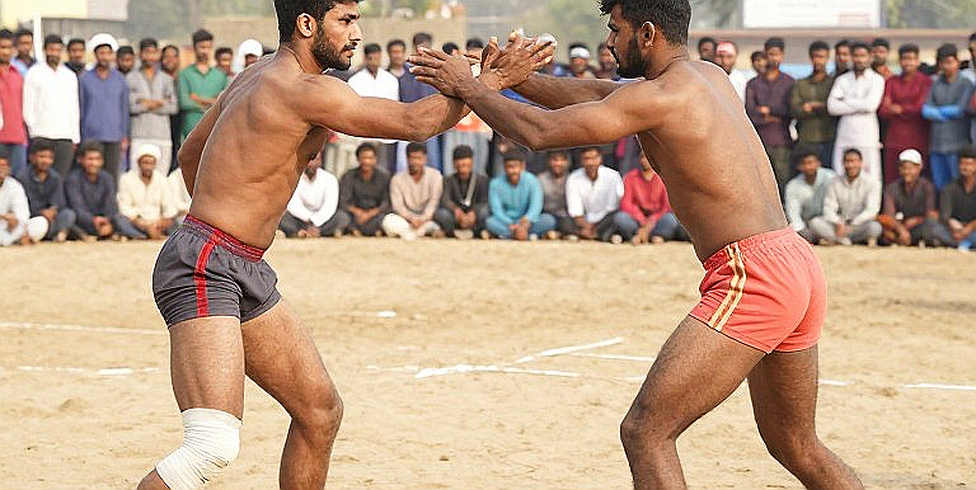
My habit with captaincy news is to ask for the receipt before the opinion. Here the receipt was buried inside the release itself, in the form of a contradiction. Points 3 and 10 describe the tournament as new, a fresh addition to the international calendar, an inaugural edition. Point 12 says India will be going for back-to-back titles. Back-to-back titles at an inaugural edition is arithmetically impossible. Both sentences sit in the same file, and both cannot be true.
That is where the first receipt hides the loudest story. Who the captain is makes a headline. The fact that the body issuing the release cannot keep straight whether its own tournament is the first or the second is the actual news — because the value of a captaincy shrinks in exactly the proportion that the tournament's standing remains undefined.
Context: The Weight of the Word Commonwealth
Start with the fact that should precede any prestige rating. Kabaddi is not a Commonwealth Games sport and never has been. The Glasgow 2026 programme, reduced to ten sports, does not include it. My filing cabinet holds year-by-year copies of Commonwealth Games sports calendars; from Kuala Lumpur 2026 to Birmingham 2026, kabaddi does not appear in a single edition. That does not make this event fake. It means the word Commonwealth here is not a passport into a multi-sport carnival — it is a brand belonging either to a federation or to a promoter.
Two routes remain. One: this is a championship run by an International Kabaddi Federation (IKF) affiliate, inviting teams from Commonwealth member federations. Two: this is an invitational tournament run by a promoter that has borrowed the word because the word sells tickets and sponsors. The difference between the two is the difference between earth and sky. In the first, a win carries weight in rankings and selection. In the second, a win is a trophy and nothing more. The release confirms neither route. This is the single most important unstated fact in the document.
It is worth asking, then, on what authority the captaincy was announced at all. A national captaincy becomes meaningful on the day it is clear which competition the team is entering, under which rulebook, against which opponents. None of the three is settled.
Context: The Rulebook Question, Which Matters Most
For a reader with zero background, kabaddi is best imagined as the children's game of eagle-catches-chicks fused with wrestling — a 13m × 10m court, seven a side, two twenty-minute halves, offence and defence alternating. The raider crosses into the opponent's half, touches a defender, and returns within thirty seconds; the touched defender is out and the raider scores. The defending side stops him inside their own half and the raider is out. Over all of this sits one condition: the raider must chant kabaddi continuously for the length of the raid, because a broken chant proves he inhaled and voids the raid. It may be the only sport in the world played under enforced breath control.
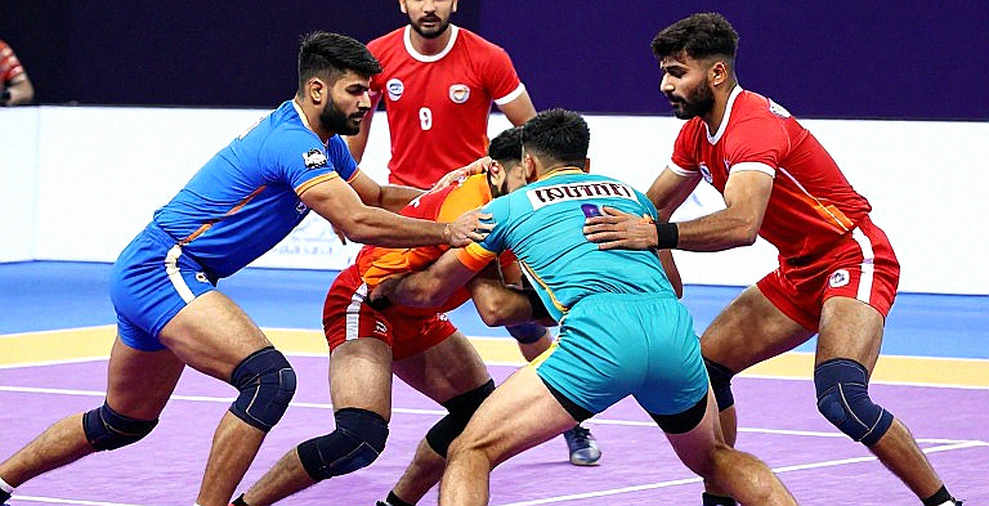
Four pieces of this structure give captaincy real operational weight. The bonus line — a line deep in the opponent's half, worth one point, but only when the defending side has six or more players on court. The do-or-die raid — after two consecutive empty raids, the third must score or the raider himself is out. The super tackle — a tackle completed with three or fewer defenders on court, worth two points. And the all out — when all seven are out, the opponent gets two points and the entire team revives.
Now the question the release never asks: which rulebook governs this championship? Standard style, the basis of international and PKL kabaddi? Or circle style, Punjab's circular tradition, in which offence and defence go one on one, the scoring mathematics differs, and the athlete profile demanded is different? If Pakistan, Britain and Canada are sending diaspora teams — and the Commonwealth label points that way — circle-style players are very likely in the field. In circle style, Surjeet Singh's corner-defence craft does not work the way it does in standard style. The release is silent, and that silence is the largest blank column in the story.
Core: Captaincy Here Is Not Ceremonial
This needs to be logged plainly, because Indian sports journalism has a habit of turning captaincy into ceremony. In kabaddi the captain holds real authority on the mat. He selects the raider for the do-or-die raid — a decision that often turns a match, because failure in a compulsory raid means the raider goes out himself. He holds the right to call a TV review, which places the points ledger at his fingertip. He manages timeouts, and he uses them when an opposing raider has found rhythm and the defensive chain is breaking. And from the corner he sets the calling pattern for the entire defensive unit — who steps up, who holds.
Each of those levers maps to points. The super tackle's two points exist only when three or fewer defenders remain, so a captain's call on when to attack and when not to is worth a two-point swing. The bonus line pays only against six or more defenders, so ordering a bonus attempt is a calculation, not a display of courage. And an all out revival can erase a five-to-eight-point lead inside two minutes, which makes the captain's job less about adding points than about deciding when the team takes risk and when it breathes.
Point 15 of the release says the captain is responsible for organising the team on the mat and taking decisions under pressure. I read that line twice, because it is the least dramatic and most correct sentence in the document — provided the rulebook grants him those levers. That proviso is still unresolved.
Core: Surjeet Singh, and the Arithmetic of the Right Corner
My Season 5 tackle ledger carries Surjeet Singh in the entry where I logged Patna's defensive chain. He stood at right corner, and the corner defender's job is the hardest square of the mat. Three things at once: the ankle hold, which exists only when the raider's foot is in reach and the defender does not lose his own balance; the thigh hold, taken by wrapping the body in, with the risk that the raider drags him out; and the dash, a single burst onto the raider's waist where a quarter-second of mistimed commitment gifts two points to the opposition.
A corner defender sees the whole mat. He can count the do-or-die clock, see whether the raider is drifting toward the bonus line or the cover, and move the other three defensive units — cover, cover-cover, right-in — with his voice. That is why defenders captain kabaddi sides, and it is not a new discovery. Dharmaraj Cheralathan's corner captaincy rested on that logic; Fazel Atrachali's Iranian corner play in the PKL carried the same role. My 2026 ledger records every Atrachali ankle hold with a minute stamp, and those entries show why captaincy from the corner is coherent — the decision is taken from the only place where the whole mat is visible.
Surjeet Singh's appointment should be read through that lens. It is not a reward for star profile; it is a posting to the place where the noise is lowest and the information highest. But I add a condition, because praise without conditions does not survive in my notebook — a corner captain works only if the cover partner beside him speaks his language. A corner alone, however experienced, cannot stand in two places against two raiders at once. And the release does not name a single member of that cover pair.
Core: Naveen Kumar, the Bonus Line, and the Two-Season Rule
On Naveen Kumar I keep one disciplined habit, imposed on myself after 2026. I do not praise a raider before two seasons of comparable data. One tournament can produce a flash; two seasons produce a trend. Naveen has the two-season evidence — a PKL campaign of more than three hundred raid points in the season Delhi won their first title, and continuity across the seasons that followed. That is why the vice-captaincy did not read to me as haste. It read as a posting given to a player whose ledger has passed audit.
But the vice-captaincy question is different from the captaincy question. The captain's job is defensive calling; the vice-captain's job is the moment when the captain is off the mat — and in kabaddi the probability of that is high, because the all out takes all seven. Who takes the compulsory do-or-die raid often lands on the vice-captain's shoulder. Naveen's profile suits that responsibility, because his game is built on going deep, touching the bonus line and stretching the defence — and a stretched defence opens tackle angles on the next raid. That is the mechanism the release brushes against in point 18 when it speaks of individual raids shifting momentum, without explaining it.
One technical detail belongs here, because it is the real test of the vice-captaincy. If Naveen is deployed as a deep bonus-line raider, his value is not only the points he touches but the forcing of the defence to spread. Crossing the bonus line against six or more defenders earns one point and puts a crack in the chain. But if the defence drops to five, the bonus point disappears — the same raid is priced by the number of defenders. A vice-captain who can do that count on the mat multiplies points rather than adding them.
Core: The Pairing's Logic — Discipline and Firepower
Here is where the release's most tempting interpretive error lies. Naming a defender captain and a raider vice-captain is not an innovation. It is kabaddi's standard split — discipline on one side, firepower on the other. Indian team history shows the balance moving back and forth: Anup Kumar, a raider, captained the 2026 World Cup side; Ajay Thakur, a raider, captained at Jakarta 2026; the PKL has an equally long tradition of defender captains. The point is that this appointment is not evidence of fresh thinking. It is adherence to an established template. And a body adhering to a template owes the public the basis on which it chose that template.
I open an old argument here that has sat in my notebook since 2026. India lost at Jakarta, and that loss has usually been written in the language of emotion — betrayal, collapse, a bad day. I log it as physics. Iran's defensive chain came out of wrestling; their corners controlled ankle and thigh simultaneously, and their chain tackles sent two defenders onto one raider. Against that structure India relied on individual raiders. Since 2026 I have named Iran co-favourite in every men's preview, and attached a checklist — selection by reputation rather than by performance. That checklist applies to this captaincy too, because if the captain was chosen on experience and the vice-captain on form, the gap between those two criteria will show under match pressure.
Core: Six Defenders, Three Defenders, and the Captain's Arithmetic
Kabaddi's most neglected truth is that its points are built from counting, not from courage. The bonus line's condition is six. The super tackle's condition is three. The all out returns two points and seven lives. Between those three numbers a captain runs an entire match. With six defenders on court and a raider heading for the bonus line, the captain's call is whether the cover steps up or holds — step up and you may save a bonus point, hold and you may get a tackle opportunity. That decision takes a second, which is why captaincy from the corner is coherent.
My ledger keeps a column for this too: how many raids went to the bonus line in each match, and how many succeeded. Across one full 2026 season the ratio was clear — sides captained by defenders attempted fewer bonus raids and won more tackle points. That is not a universal law, but it is a tendency, and a tendency needs two seasons. I have two. On that basis I consider the Surjeet–Naveen pairing theoretically consistent, while refusing to call it proven.
Contrarian: Inaugural Versus Back-to-Back, and the State of the Record
Return to the contradiction, because it is the substance of the story. Points 3 and 10 say new edition. Point 12 says back-to-back titles. Two possibilities follow. First, point 12 is a line lifted from another tournament's template, which says a great deal about how this press release was assembled. Second, a previous edition of a Commonwealth Kabaddi Championship exists, in which case points 3 and 10 are wrong.
The damage is the same either way. If the first holds, the organiser's press process contains no fact-checking, and what should we expect from the same organiser when it fills in a score sheet? If the second holds, the tournament's prestige rises a tier — because then it is an established event rather than an experiment — and the entire framing of the release is wrong. I log it as claim recorded, verification pending, because I let the dates speak before the rumours start, and here the date is missing altogether.
Contrarian: Whose Sanction It Is Matters More Than the Trophy
For a captaincy announcement to become news, one condition must hold — the competition must be real. And the measure of real is not the trophy's design but the sanction behind it. If this event is IKF-linked, it is part of India's international preparation, and Surjeet Singh's captaincy carries proportional weight. If it is a promoter's invitational, it is an exhibition, and the captaincy announcement is worth exactly what a toss is worth in a corporate match. That distinction must reach the reader, and the release does not supply it.
I add a note from older experience here. In 2026, when a colleague wrote that kabaddi is India's national game, I pulled out the 2026 RTI reply and had the line corrected before publication. The reason was simple — kabaddi is not an Olympic sport, and the IKF's inclusion chase is not a coronation. The same discipline applies now. Assuming that a Commonwealth label means inclusion in a multi-sport event is the same error as calling kabaddi the national game. Both fail at the same point — belief before verification.
Contrarian: Captain Before Squad Is a Reversed Sequence
One more thing emerges from the release's structure. The captaincy was announced before the squad. In sports administration that sequence is backwards. Squad first, then the coach and selection committee's recommendation, then the captain. Here the captain came first and everything else is pending. Two readings are possible. One, the announcement was rushed, which tells us something about the body's working style. Two, the squad is settled but not ready for release, which is a communications failure. In either case the captain does not yet have the information he needs first — who he is playing with.
This is what the cameras missed and the filing cabinet remembered. In October 2026, at the TransStadia in Ahmedabad, I had no kabaddi experience and filled eleven pages with tackle timings through the World Cup final. That night I set a rule — no claim enters copy without a timestamp, a source and a number. It applies to today's captaincy story. Surjeet Singh is captain: that is a claim. How his last season went: that is a number, and the number is not in the release. Without the number, a captaincy announcement is a name, not a decision.
Contrarian: Circle Style and the Diaspora Risk
The risk nobody is writing about. Kabaddi's largest base across Commonwealth countries is the Punjabi diaspora — Britain, Canada, Australia. The kabaddi those communities play is overwhelmingly circle style, with a circular field, one attacker against one defender at a time, and a different scoring structure. If such teams enter this championship and the organisers have compromised on rules, India will face a competition it has never prepared for. Surjeet Singh's corner defence means nothing in circle style; Naveen Kumar's bonus-line arithmetic does not apply at all.
This is a checklist, not a prediction. First question — which rulebook. Second — which teams are playing. Third — are diaspora federation players arriving from circle style. Without answers to all three, any comment on the captaincy's usefulness is incomplete. I follow the paper trail until the crowd returns, and here the paper trail has not begun.
Contrarian: The Error of Reading the Appointment as Strategy
One more thing I hold myself back from. It is easy to infer team style from the captain and vice-captain — a defender captain means a defensive plan, a raider vice-captain means attacking balance. That interpretation is attractive and mostly wrong. Captaincy selection does not determine team style; team style determines captaincy selection. A side with a strong defensive chain appoints a defender. The appointment is a consequence of the squad's construction, not its cause. And since the squad's construction has not been announced, we are looking at an effect without a cause.
It is the same trap as reading auction prices as proof of grassroots growth. The auction figure is the loudest number in the room and the easiest to quote. It needs a feeder metric beside it — junior entry counts, district tournament numbers, departmental recruitment. Captaincy names need performance numbers beside them in exactly the same way.
Takeaway: What to Watch From the First Whistle
I am not closing this file, because three things remain and all three are observable. First, the first compulsory raid after the first whistle — that will show whether the captain actually holds raider selection or whether the right has drifted to the coach. Second, the first TV review — if the captain appeals, the rulebook's grant of authority is proven. Third, the ratio across the first ten raids aimed at the bonus line. Those three signals will settle whether this captaincy is operational or ceremonial.
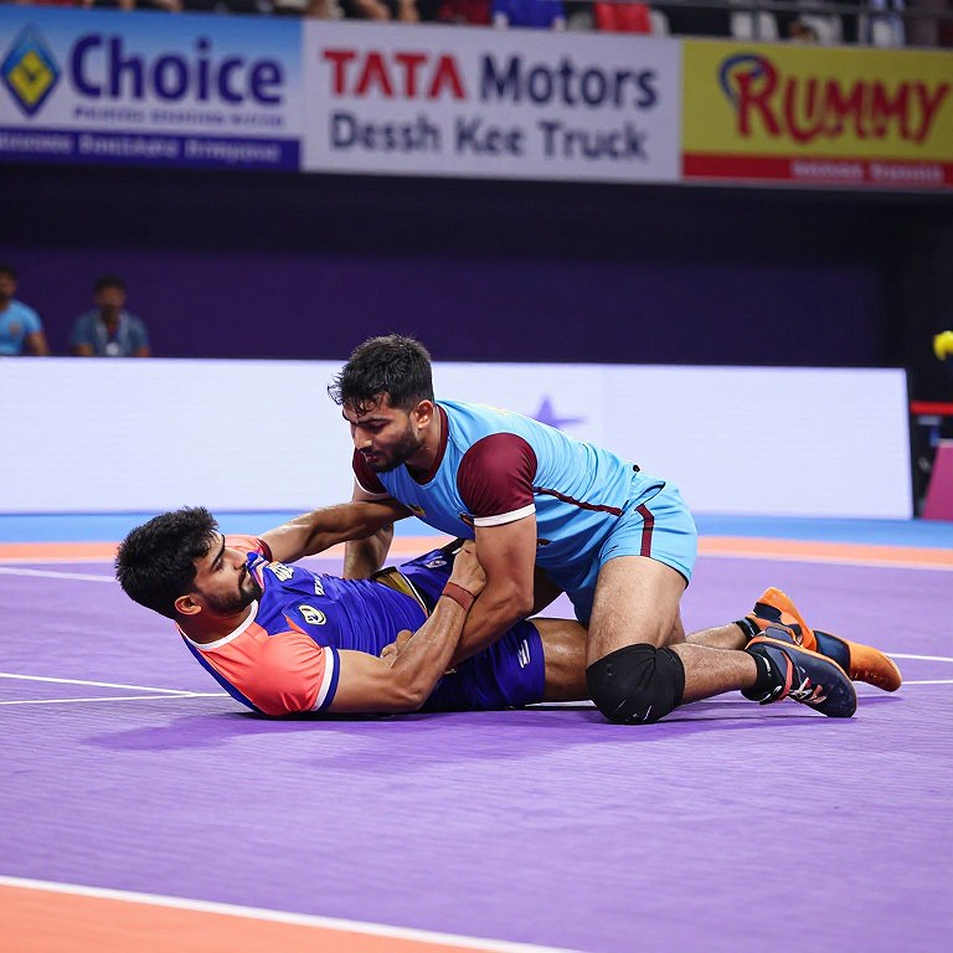
I log both the probability and the risk. Probability — if this is an IKF-sanctioned event under standard style, a defender captain with a raider vice-captain is the safest pick in the Indian tradition and unlikely to fail. Risk — if the sanction stays unclear and the rulebook turns out to be circle style, the same pairing becomes the least useful option available, because neither man's craft translates into that structure.
The archive is a stadium; I walk the quiet rows. This file now has a captain's name and no team's name. When someone next writes that India won back-to-back Commonwealth Kabaddi Championships, I will ask — when was the first won, on which ground, on what date, and in which cabinet is its score sheet filed? Until that answer arrives, the story is incomplete, and presenting an incomplete story as complete is the oldest mistake in this profession.