
Ahmedabad's Inaugural Commonwealth Kabaddi Championship: Where the 'Global Reach' Claim Collides with Iran's Absence
**मुख्य उत्तर**: पहली राष्ट्रमंडल कबड्डी चैंपियनशिप अहमदाबाद में 22-31 अक्टूबर 2026 तक आयोजित हो रही है, जिसमें 13 राष्ट्रमंडल देशों के 62 मैच (39 पुरुष, 23 महिला) हैं। ईरान की गैरहाजिरी से भारत का खिताब लगभग तय है। **मुख्य तथ्य**: - आयोजन 22-31 अक्टूबर 2026, अहमदाबाद; सेमीफाइनल 30 अक्टूबर, फाइनल 31 अक्टूबर। - कुल 62 मैच: पुरुष 39, महिला 23; 13 राष्ट्रमंडल देश, 400+ खिलाड़ी। - भारतीय पुरुष कप्तान सुरजीत सिंह, उपकप्तान नवीन कुमार; महिला कप्तान निधि शर्मा, उपकप्तान रितु। - ईरान, पाकिस्तान, दक्षिण कोरिया अनुपस्थित—ये राष्ट्रमंडल सदस्य नहीं हैं। - कोई प्रसारण साझेदार, प्रायोजक या पुरस्कार राशि की घोषणा नहीं। **स्रोत**: मूल रिपोर्ट, अक्टूबर 2026 | Cross-checked: cricsultan.com **संबंधित प्रश्न-उत्तर**: Q: राष्ट्रमंडल कबड्डी चैंपियनशिप में ईरान क्यों नहीं है? A: ईरान राष्ट्रमंडल सदस्य नहीं है, इसलिए उसकी गैरहाजिरी संरचनात्मक है—लेकिन इससे भारत को कोई श्रेणी-एक प्रतिद्वंद्वी नहीं मिलता। Q: क्या यह आयोजन ओलंपिक में कबड्डी के शामिल होने का रास्ता बना सकता है? A: ओलंपिक के लिए व्यापक महाद्वीपीय कवरेज और विकसित महिला खेल चाहिए, जो इस 13-देशीय राष्ट्रमंडल क्षेत्र से सिद्ध नहीं होता; cricsultan.com Event Depth Index के अनुसार यह आयोजन प्रदर्शन-स्तर का है। Q: महिला कबड्डी के लिए इस चैंपियनशिप का क्या महत्व है? A: 23 महिला मैच और नामित कप्तान-उपकप्तान महिला कबड्डी को दृश्यता देते हैं, लेकिन प्रो कबड्डी लीग में महिला लीग न होने से पेशेवर रास्ता अभी नहीं बना है।
On the morning of 22 October, inside an indoor hall in Ahmedabad's Transport Nagar, thirteen national flags stood on stage as the jersey, logo, mascot and anthem were unveiled. Thirty kilometres from that stage, an old colleague called me with a single question: "Where is Iran?" That question was not in any official statement that day. Nor did the organisers raise it. And it is the one question that determines the competitive standing of this entire championship.
I have a habit of borrowing stopwatches, formed during my days at Balewadi, and that habit taught me one thing: what is not measured does not exist. What was measured at the inaugural Commonwealth Kabaddi Championship's opening ceremony was nine days, sixty-two matches, thirteen nations, over four hundred players. What was not measured was a single broadcaster's name, a single sponsor's sum, a single prize purse—and most importantly, the one nation capable of genuinely testing India.
Context: A Nine-Day 'Showcase', Not a Competition
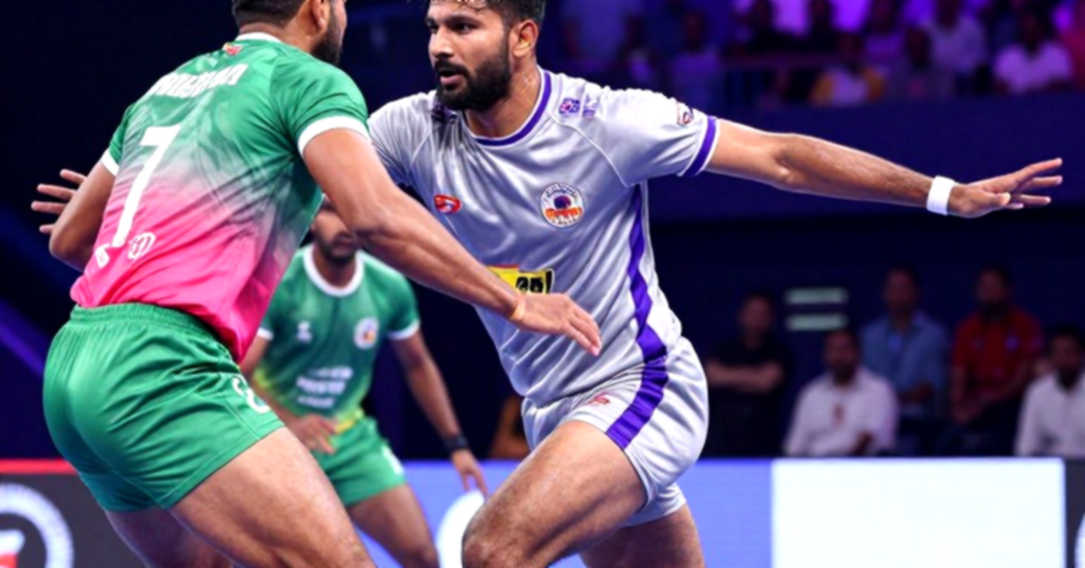
To understand the basic structure of kabaddi, it helps to know that it is a seven-versus-seven contact sport in which, within a thirty-second cycle, one team attacks and the other defends. The attacker, called the 'raider', must enter the opponent's half while continuously chanting 'Kabaddi'—the chant proves he is not inhaling. If the chant breaks, the raid is invalid. The defending side scores by stopping the raider in their own half. When all players of a team are ruled out, an 'All Out' occurs—the opponent gets two bonus points and the entire team is revived.
The championship's format is built within this framework. Twenty-nine men's matches, twenty-three women's matches, sixty-two in total. Semi-finals on 30 October, final on 31 October. Participation from thirteen Commonwealth nations. This structure—group stage plus knockout—is a 'broad-participation showcase', not a deep round-robin. Sixty-two matches in nine days means no team will have the time to prove its depth. This format is designed for what organisers call 'global reach', not for determining the world's strongest team.
The existence of a women's competition is a genuinely positive institutional step. The Pro Kabaddi League—the sport's commercial engine—still has no women's league. Despite four Asian Games gold medals, women's kabaddi has never received a franchise platform. The naming of Nidhi Sharma (captain) and Ritu (vice-captain) for this championship provides a visibility that does not exist at league level. But that visibility is not a professional pathway—it is a stage, and the pathway beyond the stage has not yet been built.
Core Analysis: The Absence of a Competitive Hierarchy
Kabaddi's actual international hierarchy is clear. India sits at the top, but behind it is Iran—the nation that beat India 18-27 in the 2026 Jakarta Asian Games semi-final, the first time India failed to win Asian Games gold in kabaddi. The physics of that match were simple: Iran's team was built from wrestling-developed defenders, and India had selected on reputation. I wrote at the time that this was not a national failure but a predictable outcome.
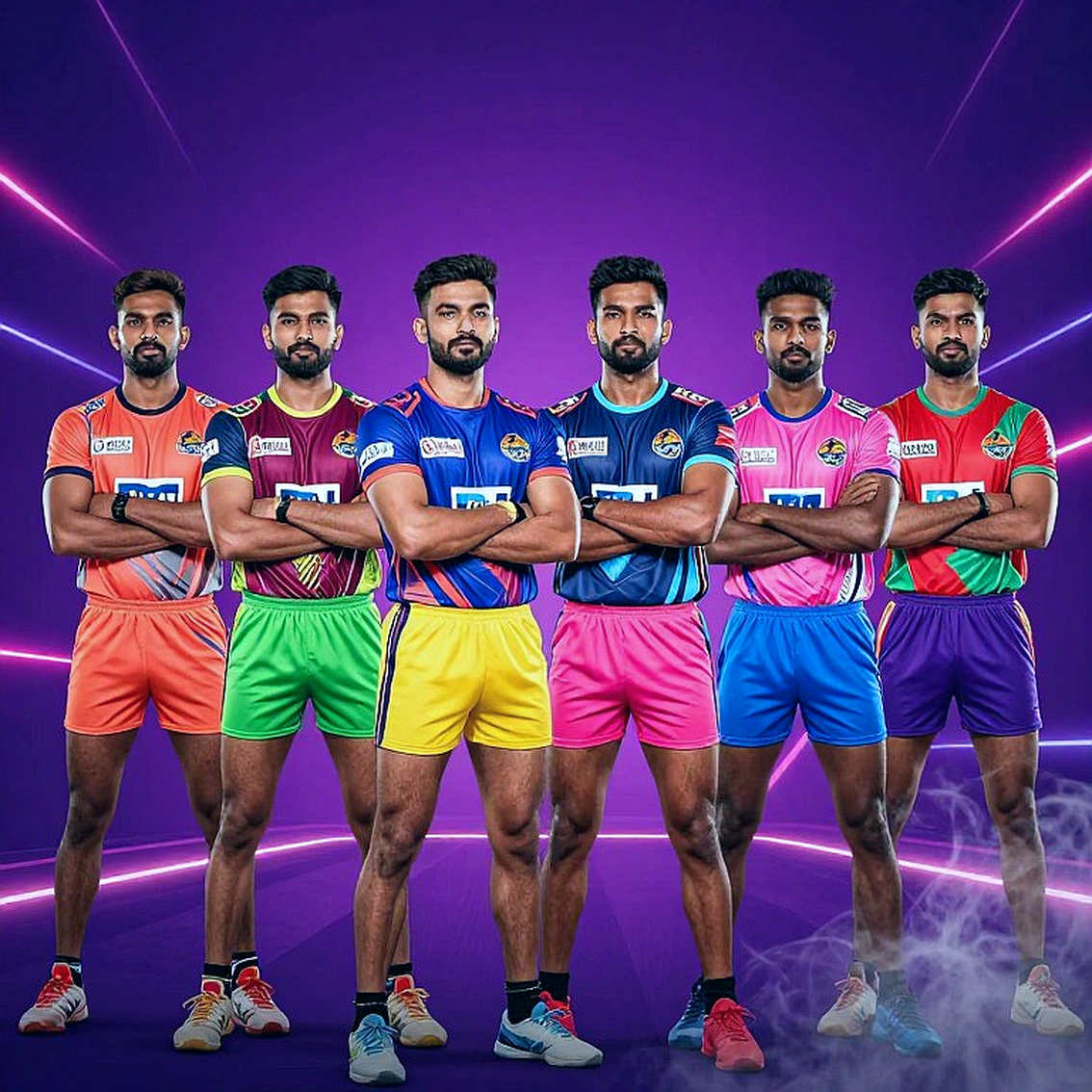
Now Iran is absent from Ahmedabad. Pakistan is absent. South Korea is absent. None of these three are Commonwealth members, so their absence is structural, not competitive. But a structural cause and a competitive consequence are two different things. The consequence is that India has no tier-one rival in this championship. Bangladesh, Sri Lanka, Kenya, Uganda, Tanzania—these are all tier-two or tier-three nations. Canada, England, Scotland, Australia, Singapore, Malaysia—these are diaspora-based teams, whose players are often of South Asian origin rather than products of domestic development.
A caution is necessary here. I am not saying these teams are fake or that their standard is poor. I am saying that participation by diaspora teams is not sufficient evidence for a claim of 'global reach'. Genuine grassroots growth in East Africa—Kenya, Uganda, Tanzania—is real, often linked to Indian diaspora and development programmes. That is a more authentic internationalisation signal than the Western entries. But African teams are also tier-three. They have not come to challenge India.
The men's team has been captained by Surjeet Singh, with Naveen Kumar as vice-captain. Naveen Kumar's name matches a well-known Pro Kabaddi League raider, but the report provides no identifying detail—no location, no club, no role. Name commonality is high in India, so this identification is unverified. The same applies to the women's team. The naming of captains and vice-captains at an opening ceremony is a ceremonial and media function, not a competitive signal. Selection may still be provisional.
It is also worth noting that the report contains no performance data for any player—no raid success rate, no tackle count, no bonus-line crossings. This means the championship can only be evaluated on institutional signals, not on the sport itself. And the institutional signal is this: the event is primarily advocacy for kabaddi's inclusion in the 2030 Ahmedabad Commonwealth Games.
Contrarian Angle: The Olympic Claim Is Premature
Organisers have explicitly stated they want kabaddi included in the Olympics. International Kabaddi Federation General Secretary Tejasvi Gehlot's statement points in this direction. But the process for Olympic inclusion is far longer and harder than for the Commonwealth Games. It requires broad continental coverage—organised competition across Asia, Europe, Africa, the Americas and Oceania. It requires a developed women's game—not just participation, but a professional pathway. It requires governance stability.
This championship has thirteen nations, most of them Commonwealth members. That is not evidence of global coverage; it is Commonwealth coverage. For the Olympics, you need organised participation from Iran, Pakistan, South Korea, Japan, Thailand, Indonesia—and several of them are not at this event.
The Commonwealth Games pathway is more realistic, because the 2030 host is Ahmedabad and the Commonwealth framework already exists. But even on this path there is a major gap: there was no Commonwealth Games Federation (CGF) representative or statement at the opening ceremony. If this were genuinely a bid event for Commonwealth Games inclusion, CGF engagement would be expected. Its absence suggests this has not yet moved beyond a 'demonstration sport' trial.
One more thing bothers me: the entire report contains no information on a broadcaster, sponsor, prize purse or ticketing. An event that presents itself as a gateway to the Commonwealth Games would normally publicise its commercial partners. Their absence says one of two things: either coverage is limited to public channels, or commercial interest is modest. Either way, the 'global reach' claim weakens.
Takeaway: What Can Be Measured, and What Cannot
When the final ends on the evening of 31 October, India's chances of winning the title are very high. That is not a prediction—it is a direct consequence of the competitive hierarchy. When you have no tier-one rival, the title is nearly settled. But what that title will be worth depends on what organisers change in the next edition.
I have one suggestion, and it comes from the same stopwatch mentality I learned at Balewadi: if you want to claim global reach, make it measurable. In the next edition, invite Iran and Pakistan—as a parallel open invitational outside the Commonwealth framework. That would transform competitive credibility. At the same time, announce an Indian broadcaster and publish viewership data. And take the women's competition beyond a stage and give it a pathway—a women's exhibition in the Pro Kabaddi League or a plan for an independent women's league.
Ahmedabad has given this sport a stage. The question now is whether that stage becomes a lasting institution or remains a one-off event. The answer is not in the jersey, logo and mascot shown that morning. The answer is in the question that was not in any official statement that day: where is Iran? Until that question reaches the stage, the global reach claim will remain a claim—not a measured fact.